UK Airspace Hit by Second NATS Outage in Two Weeks as Prestwick Technical Fault Disrupts Scottish, Northern Irish and Northern English Airports
Why It MattersRepeated air traffic control failures within weeks of each other put pressure on airlines and airports to question whether existing safety-driven traffic restrictions can substitute for underlying system resilience.
What happened
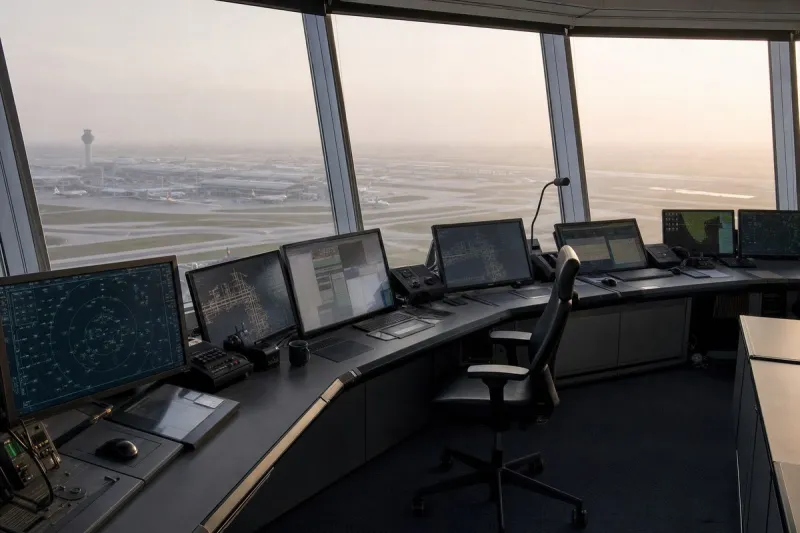
National Air Traffic Services confirmed on Monday, September 21, 2026, that it was investigating a technical issue at its Prestwick centre in Scotland, with engineers on site working to resolve the problem. Air traffic regulations were applied to maintain safety, reducing traffic across affected airspace, and NATS said "airports south of Manchester are broadly unaffected, however, flights heading north and flights departing Scottish airports are currently subject to some delay."

Belfast City Airport (BHD) saw flight cancellations, while Belfast International (BFS) and Manchester Airport (MAN) reported delays of up to one hour with no cancellations so far. East Midlands Airport (EMA), also operated by the Manchester Airports Group, saw a handful of delays. City of Derry Airport (LDY) experienced cancellations on routes to and from Glasgow (GLA).
NATS confirmed this incident is unrelated to a separate, wider outage that occurred on Tuesday, September 8, 2026, in which more than 2,000 flights were cancelled. That earlier failure was attributed to a software defect lasting just one millisecond, and a theory that a military flight plan containing anomalous data had triggered it was denied by the Ministry of Defence.
easyJet said: "This, once again, calls into question the resilience of NATS' systems and demonstrates the need for firm actions to prevent these repeated failures." Ryanair confirmed awareness of an "equipment failure" concerning ATC in the region. NATS advised passengers to check with their airlines for the latest information on their flights.
Industry impact & what to watch
Two disruptive events at NATS within a fortnight shift the conversation from a single software defect to the broader question of how a single air navigation service provider's technical failures ripple across an entire national airspace. Air traffic control in the UK operates as a centralized system where a fault at one facility, such as Prestwick, can cascade into delays and cancellations at airports hundreds of miles away, because regulators apply nationwide traffic restrictions to preserve safety margins rather than let individual airports manage around the shortfall.
Airlines including easyJet and Ryanair have publicly pressed NATS on system resilience, and that pressure is likely to intensify given the short interval between the two incidents. Whether this becomes a pattern worth tracking depends on what NATS discloses about the Prestwick fault's root cause and whether it differs mechanically from the earlier millisecond-level software defect. The next marker to watch is any technical statement from NATS distinguishing the two failures, since regulators and airlines will judge resilience claims against whether the underlying causes are genuinely unrelated or point to a shared systemic weakness.