India Issues NOTAM Declaring 600 km Danger Zone in Bay of Bengal for September 25–26 Missile Test
Why It MattersRecurring missile-test NOTAMs over the Bay of Bengal illustrate how operators must routinely rebuild flight plans around temporary danger zones rather than treat them as one-off disruptions.
What happened
India has issued a Notice to Airmen declaring a danger zone extending approximately 600 km into the Bay of Bengal for a missile test scheduled over two days, September 25-26, 2026. The notification requires civilian aircraft and maritime traffic to avoid the designated area during the test window.
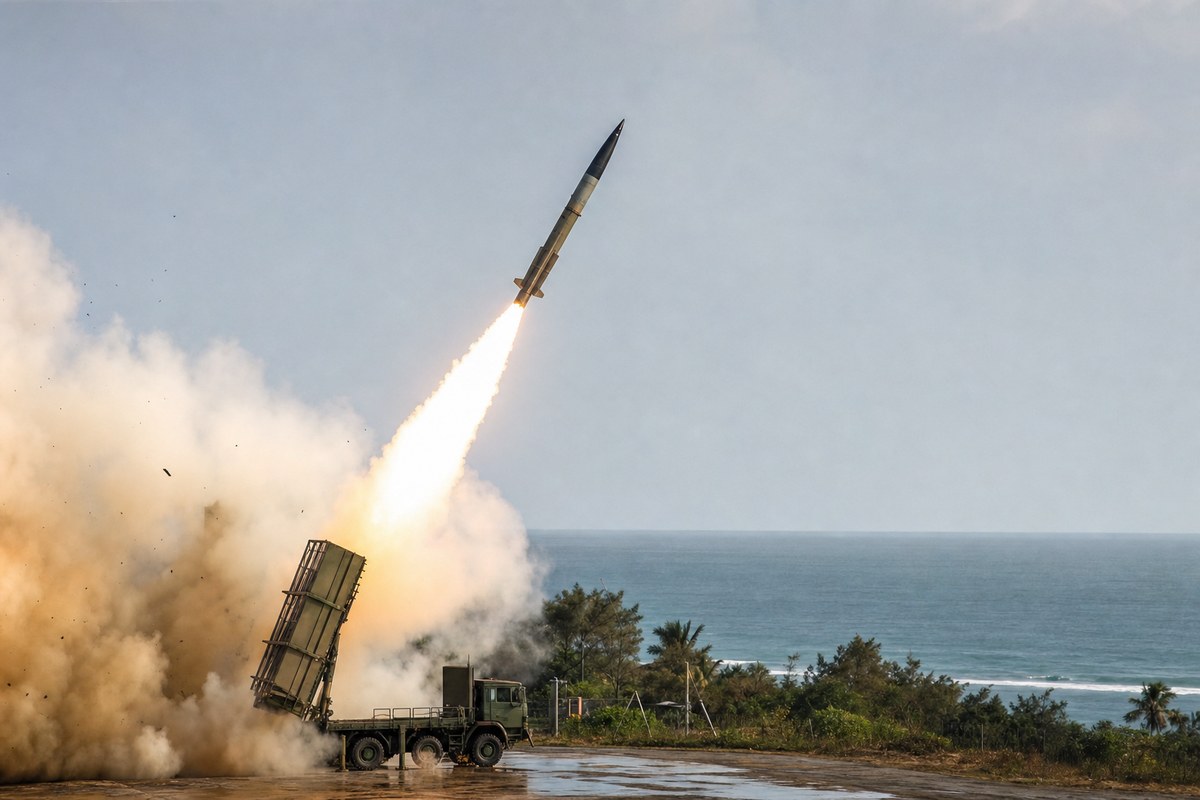
India's Ministry of Defence has not identified the missile system to be tested. Analysts have suggested several possibilities based on the range corridor: the Pralay tactical ballistic missile, which has a reach of 350-500 km; a Prithvi-series missile; or an extended-range variant of the BrahMos cruise missile, which has been developed to exceed its original 290 km range. Officials note that safety corridors typically extend beyond the actual flight path, meaning the notified distance alone cannot conclusively identify the system.
The launch is expected to originate from India's eastern testing facilities, most likely Dr APJ Abdul Kalam Island off the coast of Odisha, which has historically hosted major missile trials. The Integrated Test Range at Chandipur is also expected to participate in monitoring and tracking the missile's trajectory. The September test follows recent Indian missile activity, including trials of the Agni-IV ballistic missile, and pre-launch NOTAMs of this type are routine practice before missile tests, serving both operational and safety purposes.
Industry impact & what to watch
Danger-zone NOTAMs tied to missile testing are a recurring feature of operating in and around the Bay of Bengal, and this notice fits that established pattern of temporary airspace segregation rather than an unusual event on its own. Airlines and business aviation operators flying eastern Indian Ocean corridors routinely absorb these notices into dispatch planning, adjusting routings or timing around the published window rather than cancelling flights outright.
How smoothly that adjustment happens depends on how far in advance the NOTAM is published and how precisely the danger zone is bounded, since a 600 km corridor gives planners a wide area to route around but leaves the specific missile system, and therefore the eventual no-fly geometry, unconfirmed until closer to the test date.
The test window itself, September 25-26, is the next fixed point worth tracking, along with any follow-up notice narrowing the danger zone or confirming which system was actually launched.