Washington Post Renews Call to Move ATC Out of FAA as Foreign Privatization Record Proves Mixed
Why It MattersForeign ATC privatization shows that independence from the regulator reshapes who pays and how service levels hold up under financial stress, so funding design, not governance alone, determines outcomes.
What happened
The Washington Post renewed its call to transfer air traffic control operations out of the FAA in a Monday editorial. It argued that political interference, modernization delays and the agency's dual role as both operator and regulator have weakened safety oversight. The editorial pointed to the FAA's handling of safety warnings before the January 2025 collision near Reagan National Airport (DCA), ongoing political disputes over the agency's use of artificial intelligence, and a September Government Accountability Office report.
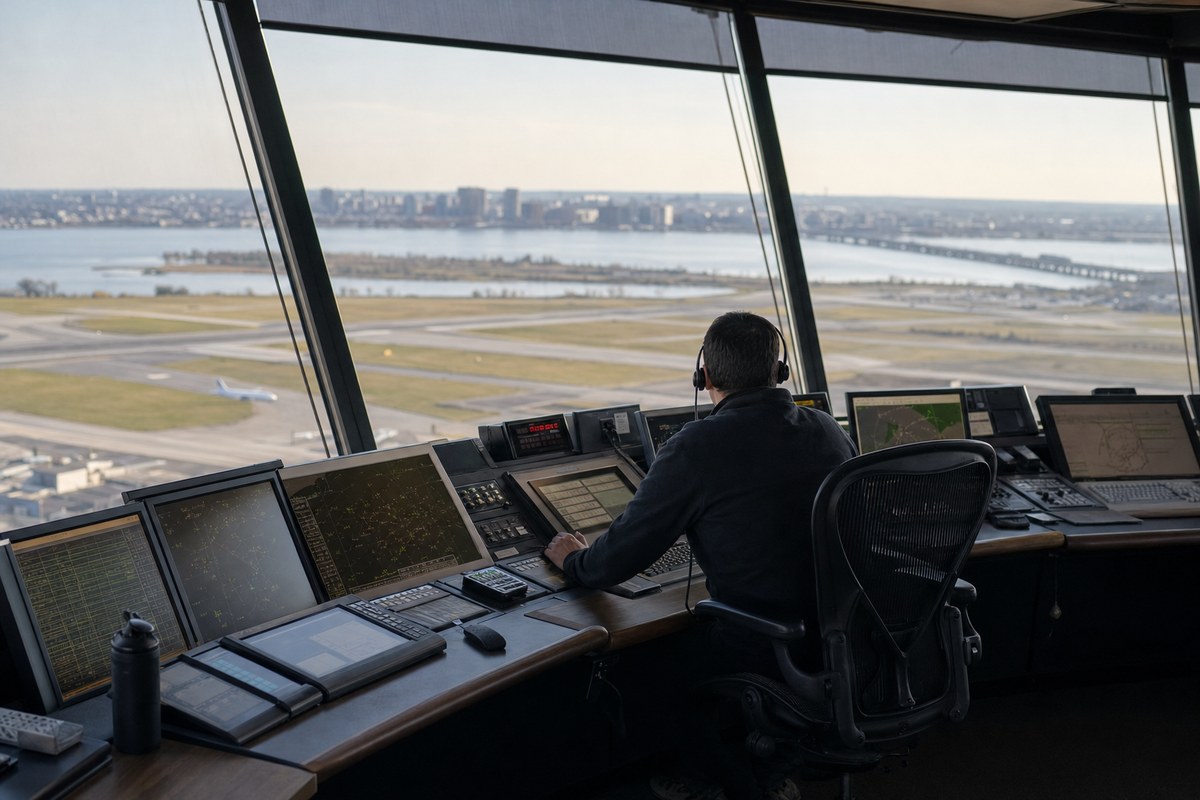
Supporters of privatization say an independent organization could secure more reliable funding, speed modernization and let the FAA focus on safety regulation. General aviation groups have long opposed the idea, warning of higher costs and reduced access. The Aircraft Owners and Pilots Association (AOPA) has argued that privatization could mean additional fees and less access. In a February statement, AOPA Senior Vice President of Government Affairs and Advocacy Jim Coon said privatization "would take years and cost billions, distracting from the work that is already underway."
Other countries made the change earlier. Canada transferred ATC to the private nonprofit Nav Canada in 1996. The United Kingdom set up a public-private partnership for National Air Traffic Services (NATS) in 2001. New Zealand created a commercially managed organization that remains government-owned. In each case government regulators kept safety oversight while operators gained independence over staffing, investment and management, and took on the job of raising their own funding. Nav Canada reported 0.7 losses of separation per 100,000 IFR aircraft movements in fiscal 2025.
How the funding models differ
The FAA manages around 45,000 flights daily, and about 90% of its fiscal 2025 operations funding came from the Airport and Airway Trust Fund, which draws on airline tickets, cargo transportation and aviation fuel. In the US, pilots do not receive a separate federal bill for ATC services.
Nav Canada charges operators directly, including annual fees for many smaller aircraft, and in August announced an average 1.92% increase in service charges effective Sept. 1. Airways in New Zealand approved an 11% increase in general aviation service charges.
Financial strain in Canada and Britain
Financial pressure has also affected service levels at smaller airports. Nav Canada replaced the Montréal-Mirabel tower with a flight service station in 2008 after traffic declined, and tower services returned in 2020. In 2020 it began reviewing service levels at 29 locations after traffic and revenue collapsed, then reversed course in April 2021 and committed to keeping its towers and flight service stations open. It also raised service charges by an average of 29.5% in September 2020.
Britain's NATS was partly privatized in July 2001, weeks before the Sept. 11 attacks cut international traffic. It sought government support by 2002, and a refinancing brought £130 million in new investment, half from the British government and half from airport operator BAA. A parliamentary investigation found the debt-heavy financing set up at privatization had worsened the company's problems.
Industry impact & what to watch
The foreign record shows that moving ATC away from the regulator changes the funding relationship more than it changes the safety framework. Regulators kept oversight in all three cases, but the new operators had to raise their own money. When traffic and revenue fell, as at Nav Canada in 2020 and at NATS after 2001, the pressure surfaced as service reviews, tariff increases or a government-backed refinancing.
For general aviation, the sharpest contrast is in who pays. A system funded mostly from a trust fund fed by ticket, cargo and fuel taxes does not bill pilots separately, while user-charge systems do, including annual fees for many smaller aircraft in Canada and an 11% general aviation increase approved in New Zealand. That is the practical content of the access-and-cost argument AOPA makes.
The next marker is whether the editorial's call turns into a legislative or administrative proposal that specifies a funding mechanism. Until a plan names how revenue would be raised and how smaller airports would be protected, the comparison with Nav Canada and NATS shows the range of outcomes, not a forecast for the US.