Saudi Airspace Strain, Gulf Escalation Risk and Record El Nino Weather Complicate Charter Planning
Why It MattersConcurrent airspace loss and weather disruption show that long-range charter economics now depend on routing flexibility, tech-stop availability and crew-nationality rules as much as on aircraft range or price.
What happened
Private and charter aviation faces a deteriorating operating picture on two fronts: a widening Middle East conflict that has degraded Europe-Asia airspace, and a record-strength El Nino driving severe weather across the Pacific, Central America and Southeast Asia.

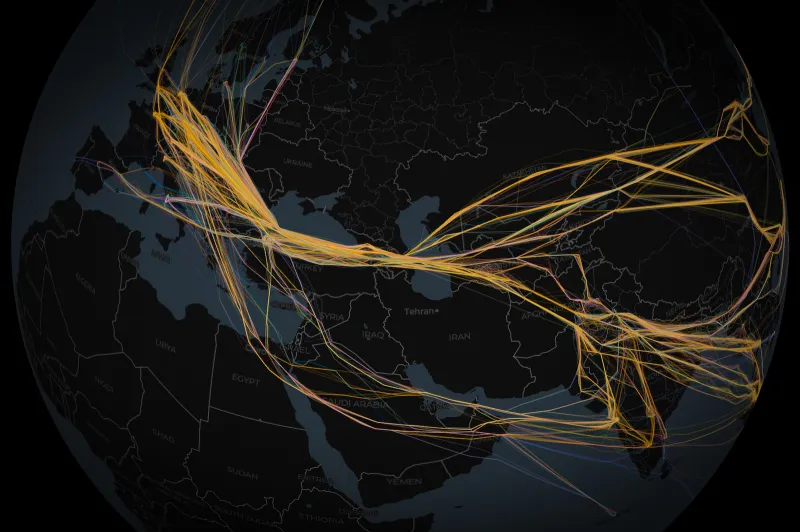
Western operators have avoided Russian, Iranian and Iraqi airspace, with Iran closed since the start of the US-Iran war in February. IATA has put the airspace now closed, restricted or avoided at about 1.35 million square miles, lengthening effective flight distances on key Europe-Asia routes by 5 to 20 percent and raising operating costs by roughly 2 to 10 percent. The average worldwide jet fuel price for the week ending October 9 was 111 percent higher than a year earlier.
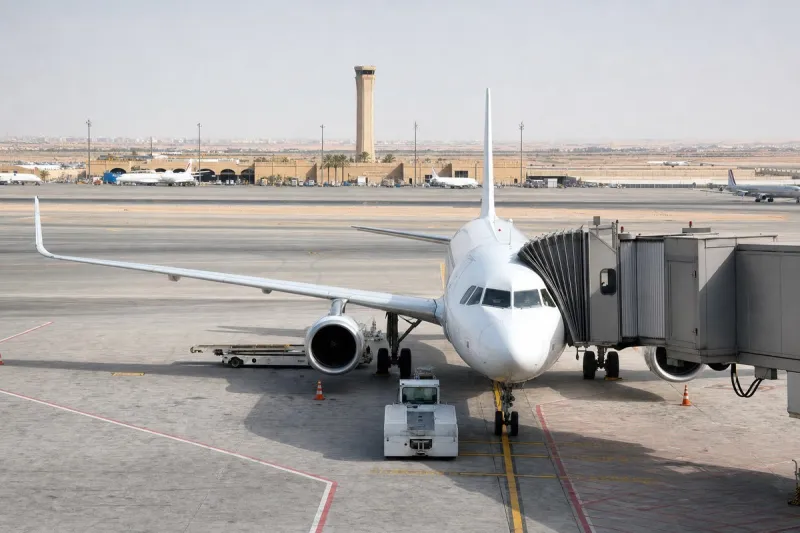
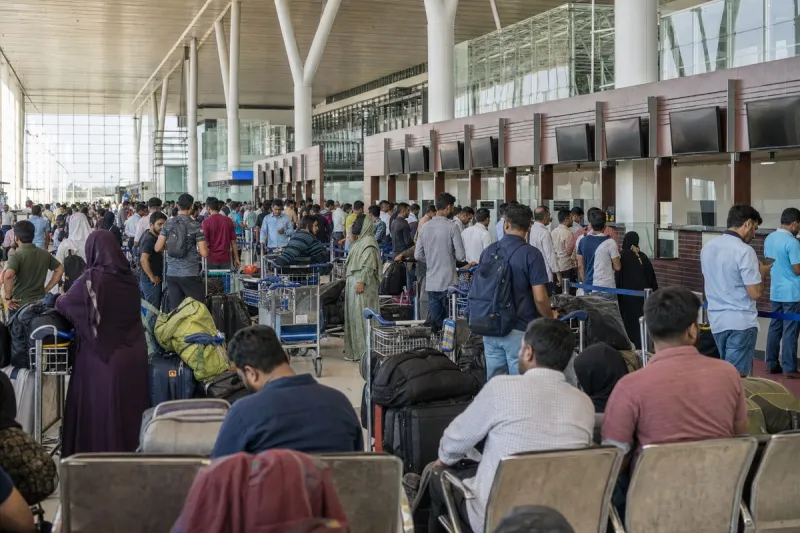
Saudi Arabia has become the main pressure point, as its airspace had become a principal corridor between Europe, Asia and beyond. Deadly attacks on airports, threats to aviation and continuing Houthi missile attacks on Riyadh have been described. King Khalid International Airport was closed until at least October 17, with no confirmed reopening. Etihad had cancelled services to Riyadh and Dammam until October 18 and to Jeddah until October 19, and other regional carriers cancelled without confirmed resumption dates. The US Federal Aviation Administration has warned operators to exercise caution.
Traffic is rerouting through Central Asia and the Caucasus, or over the Gulf States and northern Saudi Arabia. Qantas has inserted a Singapore refuelling stop into Perth-London to stay clear of the conflict zone.
Iranian officials have warned that cables, data centres and AI facilities across the Gulf could be targeted if war with the United States resumes. Two Amazon Web Services facilities in the UAE were struck by drones in March, and a strike near a Bahrain facility caused physical impact. Clashes with the Houthis near the Bab al-Mandeb strait were recorded on October 6, the UAE has agreed with Saudi Arabia to re-enter the Yemen conflict, and US planners are weighing use of the MOAB against hardened Iranian sites, including Pickaxe Mountain.
Crew, visas and weather
Israel's ban on foreign pilots and flight attendants holding dual nationality of 32 countries applies to any flight transiting the Israel FIR (30,325 square kilometres), not only flights to Israel. South Africa has reinstated temporary visa concessions, valid to November 30 or until travel resumes after a ceasefire, for foreign nationals stranded by airspace closures affecting Iran, Iraq, Syria, Qatar, Bahrain, Kuwait, Lebanon, Saudi Arabia, the UAE, Israel and the Palestinian Territories.
Super Typhoon Champi passed Guam over the weekend after rapid intensification; figures varied between gusts to 175 mph and Category 4 winds above 130 mph at closest approach. Guam and Rota remained under typhoon warning while warnings for Tinian and Saipan were cancelled.
On Mexico's Pacific coast, Hurricane Trudy was a Category 2 system with 105 mph winds, with a hurricane warning from Manzanillo, Colima, to Cabo Corrientes, Jalisco. In Southeast Asia, fires were burning on Sumatra and Borneo.
The El Nino anomaly is projected near 3.7C for October-December and may peak in December. An unconfirmed 600 km Beijing restricted area is circulating on a document dated in October.
Industry impact & what to watch
Ultra-long-range Europe-Asia and Australasia missions are where the squeeze is tightest. With Iranian, Iraqi and Russian airspace avoided and Saudi Arabia no longer a dependable corridor, quotes on those sectors have to assume tech stops, with the crew duty consequences that follow, and diversion planning around alternates outside the threatened arc. Qantas adding a Singapore stop to Perth-London shows even scheduled flag carriers are absorbing that cost.
Crew and routing now have to be checked as one problem. Israel's dual-national crew ban reaches any flight transiting the Israel FIR, so a route chosen to avoid one risk can invalidate the roster built for it. Guam's role as a transpacific technical stop is similarly exposed while the typhoon warning stands there, making facility and fuel availability a verification item rather than an assumption.
The dated milestones are concrete. Whether King Khalid International and the Jeddah and Dammam services resume on October 17, 18 and 19 will show how fast the Saudi corridor recovers. A tighter FAA advisory, any spread of GPS interference along northern Saudi tracks, and any US strike decision or Houthi or Iranian retaliation against Gulf infrastructure would each change the picture. On weather, a December El Nino peak would favour continued Pacific cyclone activity while suppressing the Atlantic.