Montana Renewables Plans $137M Expansion to 200 Million Gallons of SAF by 2028, Cuts DOE Loan Draw to $34M
Why It MattersThe revision suggests SAF capacity growth can be pursued through modular, self-funded, quick-payback projects and asset redeployment rather than a single large loan-financed megaproject.
What happened
Montana Renewables, LLC (MRL), an unrestricted subsidiary of Calumet, Inc. (NASDAQ: CLMT), has announced a revised expansion plan targeting approximately 200 million gallons of annual Sustainable Aviation Fuel (SAF) production and 17,000 barrels per day of total product sales by year-end 2028. The total remaining project capital for the expansion is $137 million, down from the $1.2 billion megaproject originally contemplated under a U.S. Department of Energy (DOE) loan. The amended Loan Guarantee Agreement, originally executed in January 2025 with the DOE's Office of Energy Dominance Financing, reduces Phase 2 DOE funding from up to $658 million to a single final draw of $34 million, with the remainder self-funded from MRL earnings and no third-party equity required.
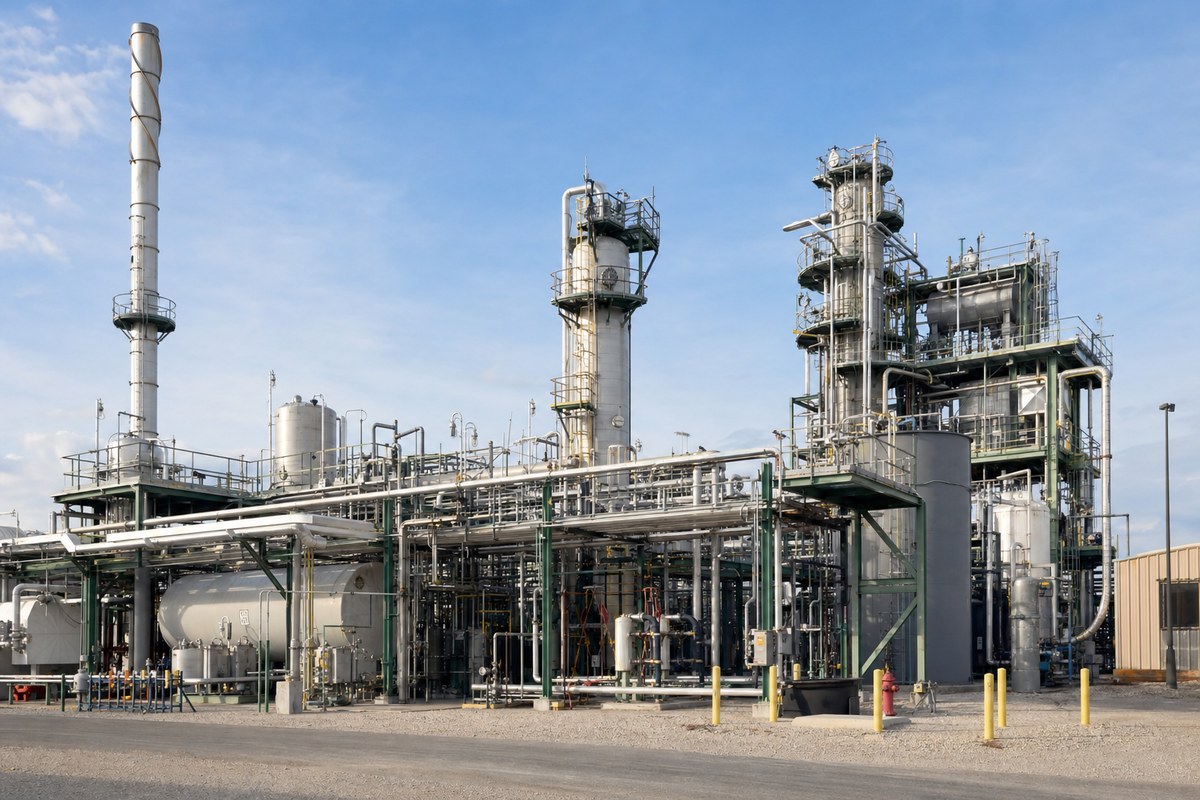
The centerpiece of the revised plan is the redeployment of selected assets from the adjacent Calumet Montana Refining (CMR) facility — including a hydrotreater, hydrogen plant, and naphtha splitter — to Montana Renewables under a long-term lease. The tied-in hydrotreater creates a dual reactor system operating in a "polishing" mode rather than the industry-standard "cracking" mode, which the company says delivers competitively advantaged SAF yields while reducing by-product production and yield loss. The expansion is structured as six smaller, modular, quick-payback projects rather than a single large construction project.
Following constraint removal completed at the Spring 2026 turnaround, MRL is currently producing at a run-rate of 60 million gallons of SAF per year. The company expects to exceed 80 million gallons per year by year-end 2026, surpass 120 million gallons by Spring 2027, and reach approximately 200 million gallons by year-end 2028. The program also aims to capture approximately 20 million gallons per year of renewable propane and butane, previously burned as fuel gas, as saleable product, and to improve renewable naphtha yields.
A fourth-quarter 2026 turnaround is scheduled to complete the hydrotreater tie-in. CMR will continue to operate, producing retail asphalt and retaining all employees in Great Falls, Montana, while providing shared site cost efficiencies; the company estimates CMR can capture approximately $50 million of EBITDA at current refining margins before the transition. The first DOE tranche of $782 million was funded in February 2025 and used to recapitalize MRL, including a $150 million equity investment by Calumet. The DOE loan retains its 15-year tenor at the U.S. Treasury rate plus 3/8% annually, with principal and interest servicing deferred until the MaxSAF® system is commissioned, and the March 2029 first servicing date and December 2039 maturity remain unchanged. At full capacity, MRL expects to consume approximately 2 billion pounds of farm- and ranch-originated feedstocks annually. Calumet CEO Todd Borgmann said the project "captures approximately 70% of the originally expected benefit while spending only 15% of the originally expected Phase 2 capital."
Industry impact & what to watch
This restructuring shows how a SAF producer can scale output without committing to the full capital intensity of an original megaproject design, instead phasing capacity through smaller, quick-payback increments tied to existing site assets. Redeploying an adjacent refinery's hydrotreater, hydrogen plant, and naphtha splitter under lease — rather than building new units — illustrates how co-located conventional refining assets can be repurposed to support renewable fuel yield gains at a fraction of new-build cost.
The reduced DOE draw, down to a single $34 million tranche from as much as $658 million, indicates that self-funding from operating earnings is viewed internally as sufficient to carry the remaining buildout, which changes the project's exposure to loan servicing terms once the MaxSAF system commissions ahead of the March 2029 first servicing date. CMR's continued asphalt production and estimated $50 million of EBITDA at current margins also show how a legacy refining operation can subsidize a renewable transition while retaining its workforce.
What follows will depend on execution of the six modular projects against the stated run-rate milestones: exceeding 80 million gallons per year by year-end 2026, surpassing 120 million gallons by Spring 2027, and reaching about 200 million gallons by year-end 2028, with the fourth-quarter 2026 turnaround completing the hydrotreater tie-in as the next dated checkpoint.