Diverging OEM Backlogs Signal Uneven Business Jet Delivery Growth Through 2030
Why It MattersWidening gaps between OEM backlogs point to an increasingly uneven production recovery, with heavy-cabin makers gaining ground faster than light and mid-size segment producers.
Business jet deliveries from six major OEMs reached approximately 767 units in 2024-2025, roughly 12% above the pre-pandemic 2019 level of 684 units but still nearly 42% below the all-time peak of 1,317 units set in 2008. A production forecast through 2030 built on manufacturer-level backlog data shows sharply different trajectories across the industry's leading makers.
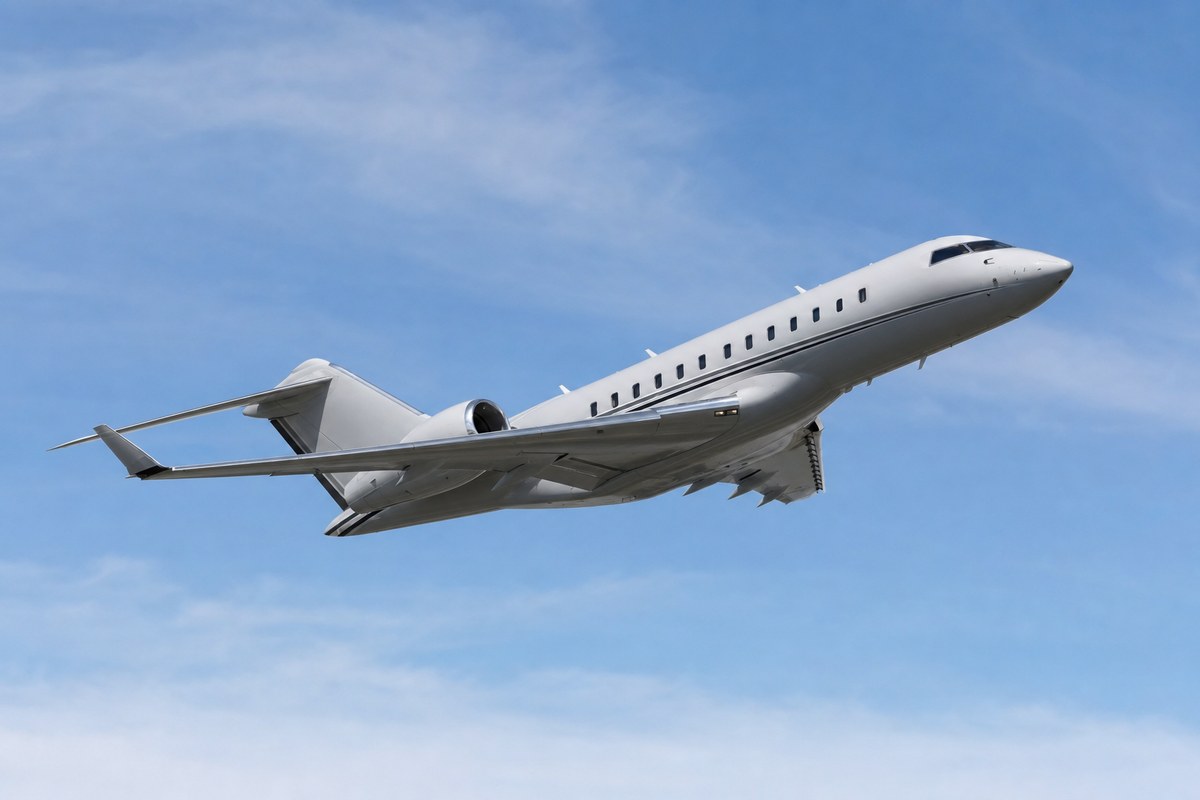
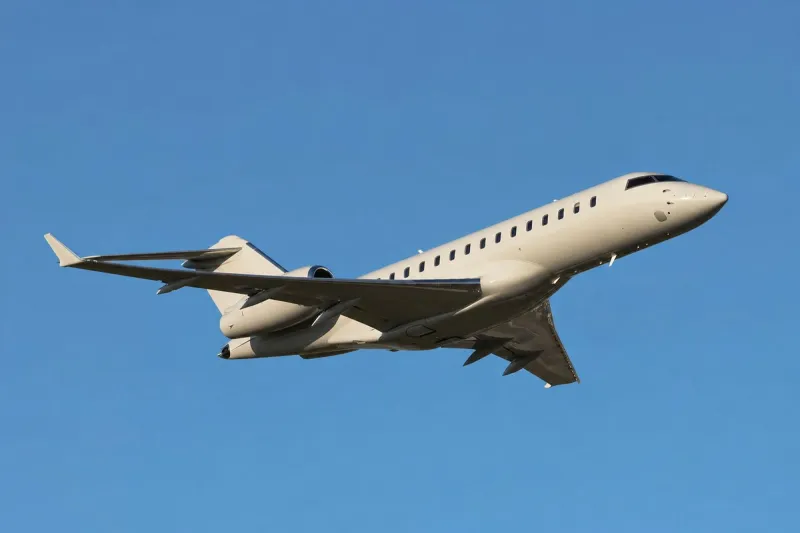
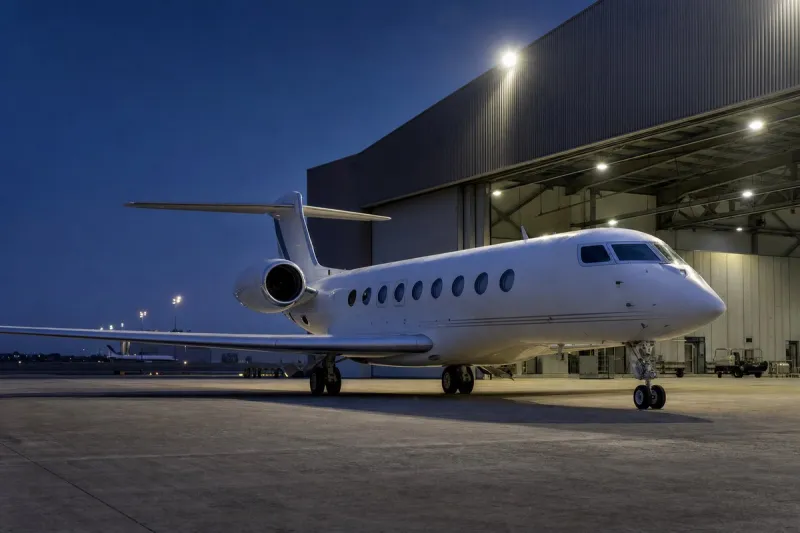
First-quarter 2026 disclosures show Bombardier's backlog grew 43% year over year, driven by the Challenger 3500 and Global 7500/8000 family, the strongest forward indicator in the group. Gulfstream's backlog grew 17% as the G700 and G800 ramp normalizes following certification-driven volatility. Textron's backlog rose just 1% even as Textron Aviation's segment revenue climbed 22% in Q1 2026, while Embraer's unit backlog was essentially flat despite company-wide quarterly revenue rising more than 30%, both cases pointing to pricing and product-mix gains rather than accelerating unit output.
Those divergences drive per-OEM 2026 production growth assumptions ranging from 2% for Textron to 9% for Bombardier. The forecast projects total six-OEM output rising to roughly 872 units by 2029, still about one-third below the 2008 peak, before a probability-weighted cyclical correction is modeled for 2030, applied group-wide rather than on a per-OEM basis.
Historical data spanning 2000-2025 show production fell 34% from its 2008 peak by 2009 and nearly halved by 2012. COVID-19 pushed deliveries to 533 units in 2020 before one of the fastest recoveries on record. Across the dot-com correction, the global financial crisis, and the pandemic, average peak-to-trough declines ran approximately 38% for light jets, 43% for mid-size and super-mid-size jets, and just 15% for heavy, long-range, and ultra-long-range aircraft. Year-over-year delivery changes against US real GDP growth across 2000-2025 yield a correlation of 0.50, driven notably by parallel declines in 2009 and 2020 and the joint rebound in 2021, with US GDP growth forecast to hold in a 1.8-2.9% band through 2030.