ATR Unveils 50-Seat Three-Class ATR 72 Cabin Concept With Forward Door for U.S. Market
Why It MattersThe concept shows regional-jet retirements pushing turboprop makers toward jet-like cabin features and class structures once reserved for mainline aircraft, betting on demand years before committing to a program launch.
What happened
ATR unveiled a 50-seat, three-class cabin concept for the ATR 72 at the Regional Airline Association Leaders Conference in Washington, D.C., on September 23, aimed at U.S. operators ahead of an expected wave of regional jet retirements. The concept applies to existing ATR 72-600 aircraft.
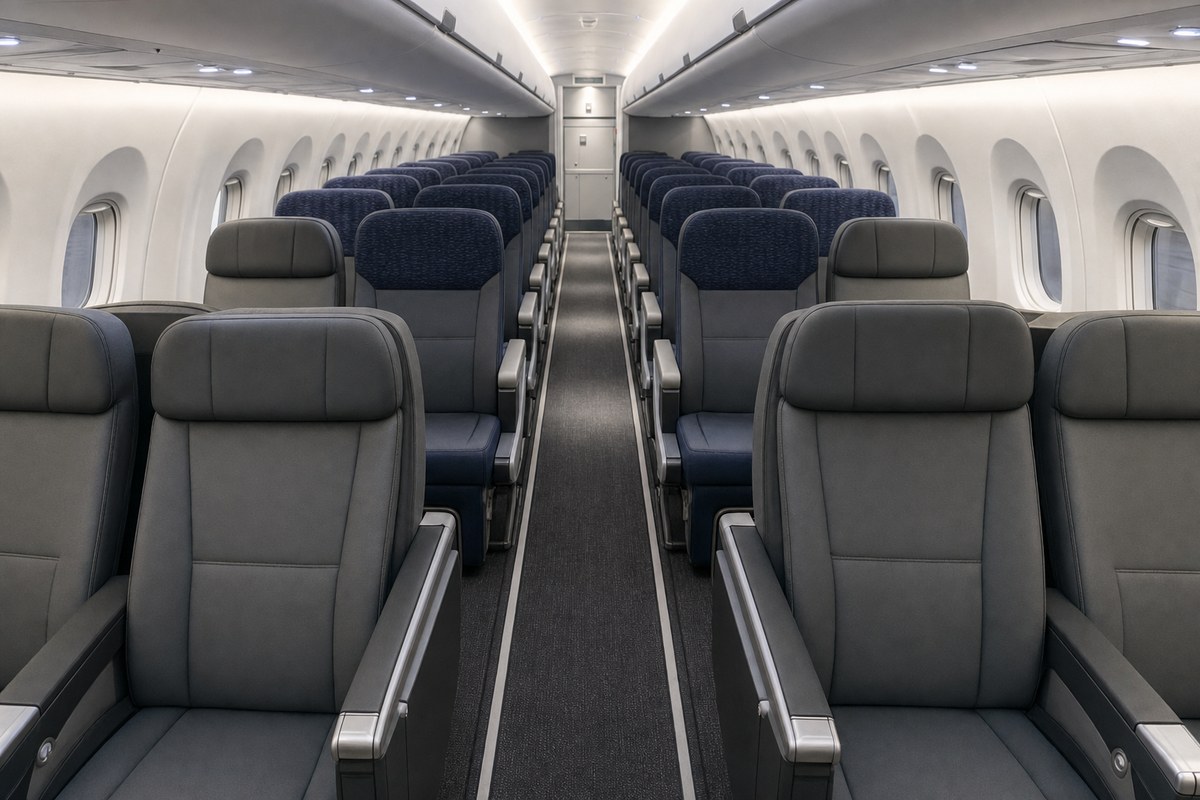
The design includes a forward cabin door for jet-bridge compatibility, a front galley, and bin space for more than 50 onboard roller bags — 30 in overhead bins and 24 in floor-mounted receptacles. The central aisle is about two inches wider than the Bombardier CRJ-550, with an additional inch of cabin height. The baseline layout has 10 first-class seats at a 40-inch pitch, 20 economy-plus seats at a 33-inch pitch, and 20 economy seats at a 30-inch pitch, with a standard seat width of 18 inches, comparable to a single-aisle airliner.
ATR chief commercial officer Alexis Vidal said the airframer is targeting 2030 as the timeline for both designing and launching the program, saying "the market demand will be quite strong" by then. The concept was developed in consultation with airlines, and an official program launch would follow demonstrated operator interest. ATR counts Alaska-based Aleutian Airways and public charter operator JSX among its current U.S. customers; JSX began trialing ATR 42s in 2025 and operates four of the type on routes its Embraer jets cannot serve. ATR said it is unconcerned by JSX's separately announced order for up to 100 Heart Aerospace 36-seat hybrid-electric regional aircraft, and ATR's own EVO program aims to incorporate a hybrid approach in the middle part of the next decade.
Industry impact & what to watch
The move reflects a broader shift among regional airframers to design cabins that mimic mainline comfort and boarding mechanics — jet-bridge doors, tiered classes, wider aisles — as U.S. carriers look for aircraft that can replace aging regional jets without sacrificing passenger experience. In the 50-seat category, where scope clauses and retiring CRJ and Embraer fleets constrain capacity choices, a turboprop that offers first-class seating and jet-bridge access could compete on grounds beyond fuel burn and trip cost.
How this plays out depends on whether operators translate interest into firm commitments; ATR has tied program launch explicitly to demonstrated demand rather than announcing a committed timeline. JSX's parallel order for Heart Aerospace's hybrid-electric aircraft signals that even ATR's own customers are hedging across propulsion types, which will test whether a three-class turboprop cabin or a smaller hybrid-electric jet better fits the routes carriers actually need to fly by 2030.