Airplane Geeks Podcast Episode 907: Airshow Photography, Boeing $131B F-15 Contract, TSA Scraps Gold+ Program
Why It MattersLarge defense sustainment awards and pilot screening-privatization pilots both show how slowly entrenched government aviation programs shift, even when a single contract or grant reshapes the numbers involved.
What happened
Episode 907 of the Airplane Geeks Podcast opens with guest Logan Lynch, a private pilot, UAV operator, and part owner of a 1966 Cessna 150F nicknamed Graham Cracker, discussing airshow photography techniques. Lynch, who holds a Bachelor's in Aviation Management from Utah Valley University and has attended EAA AirVenture since 2018, published a 2026 EAA AirVenture photo gallery and recommends renting long zoom lenses from Lensrentals, using a monopod for fast jets and a tripod for night shows, shooting RAW over JPG, editing in Lightroom, and panning to achieve prop blur.
The episode's news segment covers several stories. Textron Aviation named a new president and CEO who most recently served as senior vice president of Customer Support and joined Cessna Aircraft Co. in 2009 as a production manager, later holding roles including vice president of quality, vice president of sales, and senior product director for the Citation XLS and Citation X lines. On the fatal Air Canada Express crash, two air traffic controllers left roughly one hour before the end of their shift that night in a practice known as "early shove," leaving two controllers to cover the tower; the departing controllers were not required for minimum staffing at that hour. The FAA has not stated that their absence contributed to the accident, the NTSB has not yet determined a probable cause, and the National Air Traffic Controllers Association said it was discussing the allegations with FAA management.
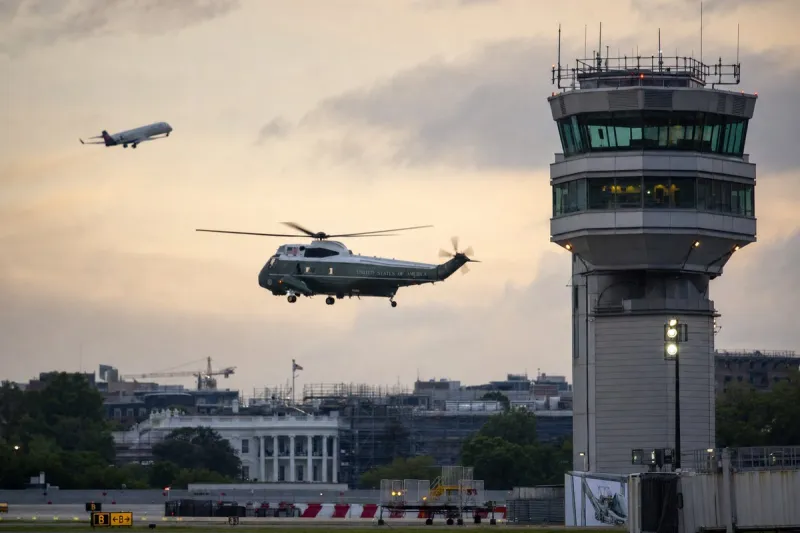
Portland International Jetport in Maine will use a $200,000 FAA grant, supplemented by state and airport funds, to install location transponders in 57 airfield vehicles to improve controller situational awareness. Separately, White House construction displaced the radio receiver used by Marine One, causing controllers at Ronald Reagan Washington National Airport to miss the standard three-minute warning call ahead of Marine One departures on multiple occasions; the FAA has since adjusted the antenna to improve communications between Marine One and the airport.
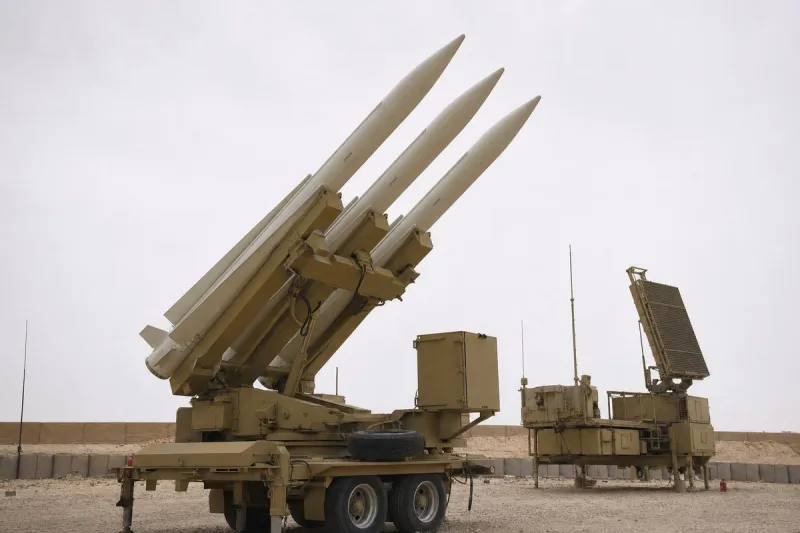
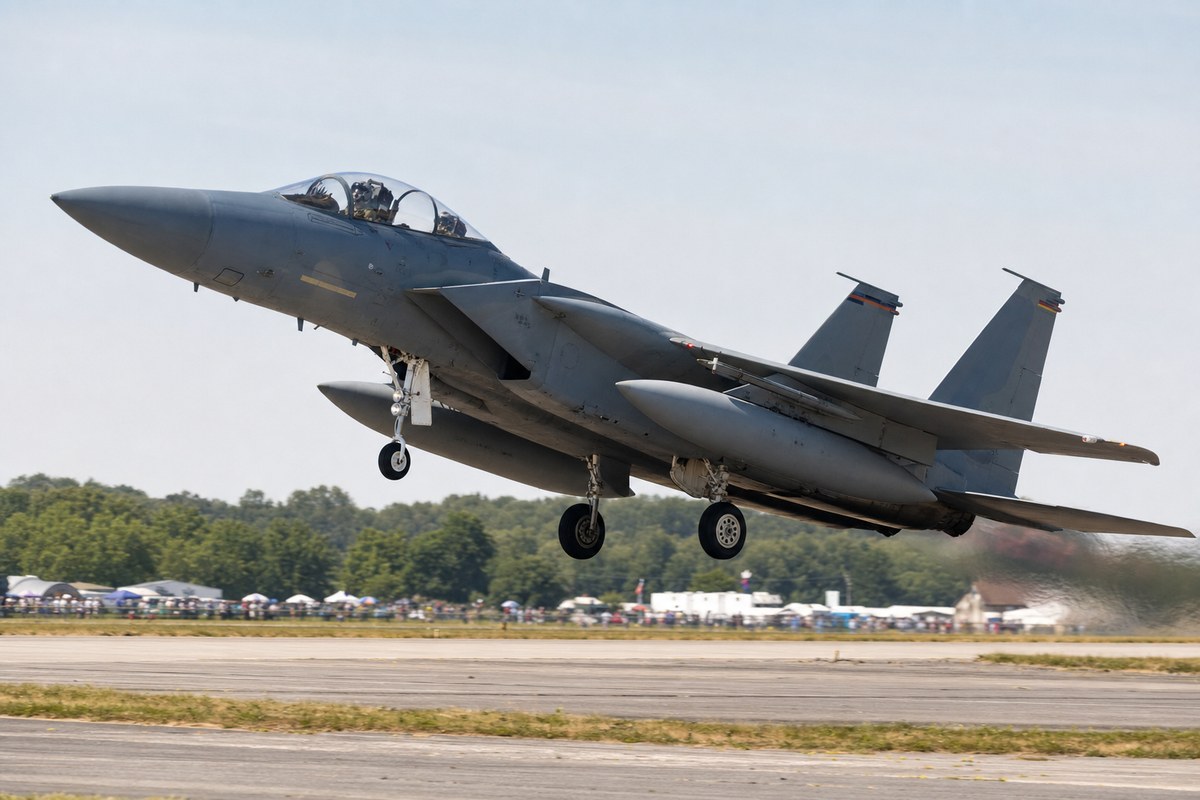
The U.S. Department of War awarded Boeing a $131,230,000,000 ceiling, indefinite-delivery/indefinite-quantity contract on August 24, 2026, for the F-15 Eagle Crest program, covering aircraft production, systems integration, modernization, upgrades, retrofits, sustainment, and organic depot maintenance for the Air Force, Air National Guard, and other customers. Work will be performed in St. Louis, Missouri, with completion expected by August 2037. The TSA scrapped its Gold+ privatized airport screening program after approximately three months, after only three airports — Tampa, Charleston, and Des Moines — expressed interest; Tampa International Airport conducted an extensive review and declined to adopt Gold+, and the American Federation of Government Employees sued the TSA over the program. The TSA said it will replace Gold+ with an evolved version of the existing Screening Partnership Program, which launched in 2002 and currently operates at 20 U.S. airports.
Johannesburg-based regional airline Airlink conducted a low flypast over DHL Stadium in Cape Town, South Africa, which Flightradar24 calculated flew as low as 41-46 ft (12.5-14 m) above the top of the stadium. Airlink said the South African Civil Aviation Authority approved the flyover and that flight data confirms both aircraft operated within approved altitude and speed limits, with each aircraft crewed by three senior captains serving as commander, co-pilot, and safety/technical officer. Airlink has handed over black-box data to authorities.
Industry impact & what to watch
The episode's news roundup illustrates how differently aviation institutions move at different scales. A single sustainment contract worth $131,230,000,000 can lock in more than a decade of Air Force and Air National Guard fleet support in one stroke, while a screening-privatization pilot program can collapse in three months once only three airports show interest and one union sues over it.
That contrast reflects how defense sustainment and civil aviation policy work on different clocks: long-lead military production and depot maintenance contracts are structured to run through 2037 regardless of near-term political turnover, whereas airport-level programs like Gold+ depend on voluntary buy-in from individual airports and can be abandoned once that buy-in fails to materialize. The Screening Partnership Program's return to being the default alternative shows regulators reverting to an established mechanism rather than building a new one from scratch.
The staffing detail in the Air Canada Express crash investigation points to a recurring question in tower operations: whether shift-change practices like "early shove" meet minimum staffing rules on paper while still altering the margin available during unusual events. NATCA's discussions with FAA management, and the NTSB's still-pending probable-cause finding, are the two threads most likely to determine whether that staffing detail becomes part of the eventual findings.