All Iranian Airline Flights to UAE Cancelled Amid U.S. Sanctions and Regional Airspace Restrictions
Why It MattersThe cancellation shows how sanctions pressure can cut off a national carrier network route by route, forcing airspace and ground-service disruptions well beyond the sanctioning country's own borders.
What happened
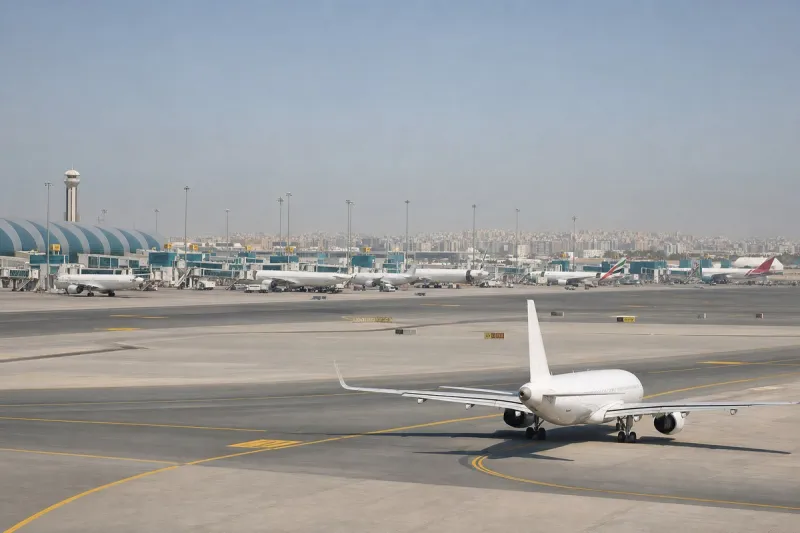
Iranian news agency ISNA reported that all Iranian airline flights to the United Arab Emirates have been cancelled. The report gave no specific reason for the suspension of UAE services.
The cancellation follows a major U.S. sanctions action announced on September 8, in which the U.S. Treasury Department's Office of Foreign Assets Control designated numerous Iranian airlines and aviation-related entities and suspended certain previously authorised civil-aviation transactions. A wind-down period for some of those activities expired on September 23. Iranian airlines cancelled some international flights following those measures.
On the same day the UAE cancellation was announced, an Iranian aviation official said a Tehran–Dushanbe flight had been forced to return to Imam Khomeini International Airport after Turkmenistan refused to authorise Iranian airlines to use its airspace. Civil Aviation Organization spokesman Majid Akhavan advised passengers to obtain updated information from relevant authorities before travelling.
Iranian airlines have already faced difficulties obtaining foreign airport services, fuel, ticketing and other support functions. No date has been announced for restoration of the cancelled UAE services. UAE airports remain operational, and the suspension applies to Iranian carriers rather than to all air links between the two countries.
Industry impact & what to watch
This case shows how a sanctions designation against airlines and aviation-related entities can ripple outward into cancelled routes, refused airspace and disrupted ground support well beyond the country that imposed the measures. Once foreign authorities and service providers treat a carrier as a sanctions risk, the practical effect can extend to fuel supply, ticketing and airport handling agreements, not just to the specific transactions named in a designation.
International route networks depend on a chain of foreign counterparties — airspace authorities, fuel suppliers, ground handlers, ticketing systems — each of which can independently decide to withdraw service once a carrier's status becomes uncertain. Turkmenistan's refusal to authorise Iranian airspace use for the Tehran–Dushanbe flight illustrates how a single country's decision can force an aircraft to turn back, separate from any UAE-specific action.
What happens next will depend on whether any date is announced for restoring UAE services, whether other neighboring states follow Turkmenistan's approach to airspace access, and what guidance Iran's Civil Aviation Organization issues to passengers as the wind-down period from the September 8 sanctions continues to play out.