IIT (ISM) Dhanbad Simulations Map SHM1 Business-Jet Airfoil Aerodynamics From Low Speed to Mach 0.78
Why It MattersOpen benchmark data on a business-jet laminar-flow wing section gives designers of future light jets a reference for testing flow-separation and shock-control techniques against known transonic behavior.
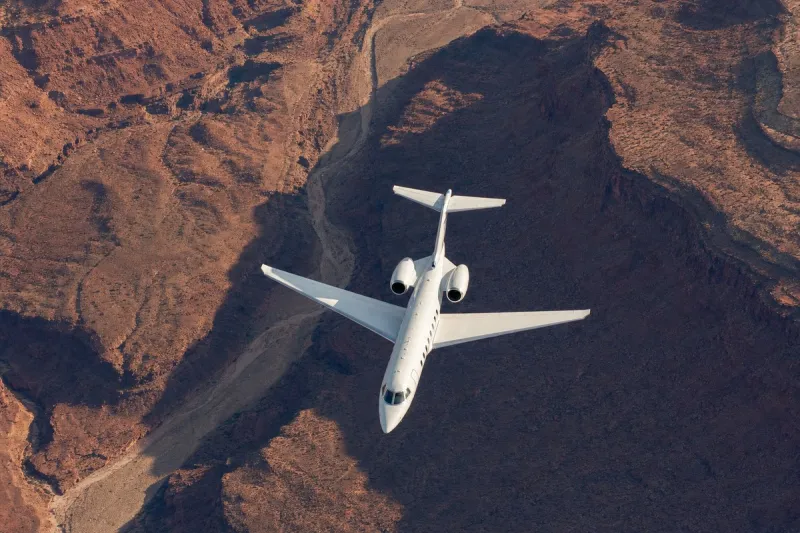
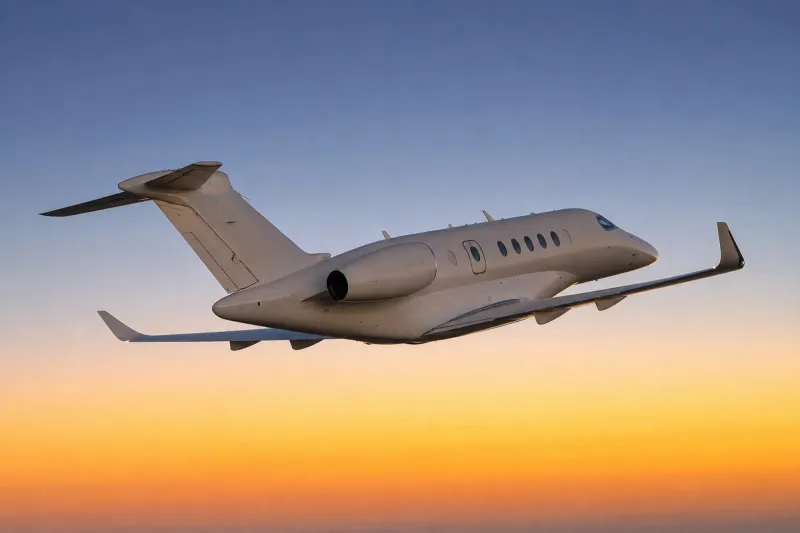
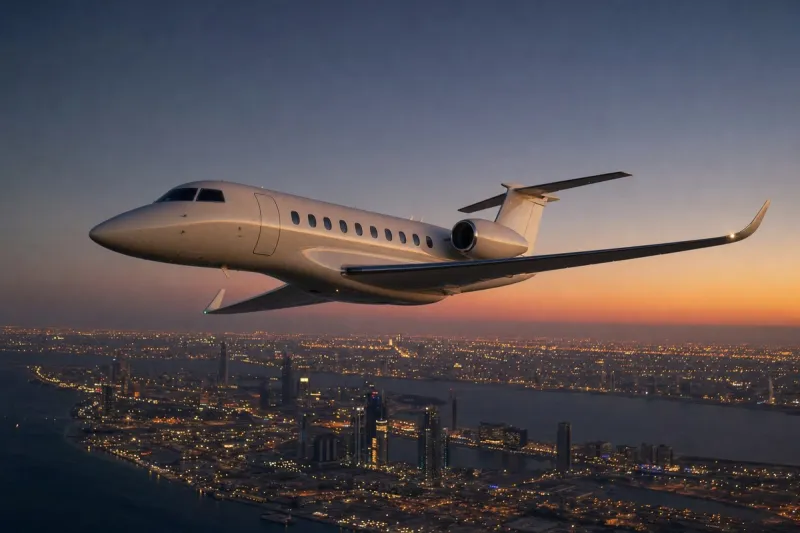
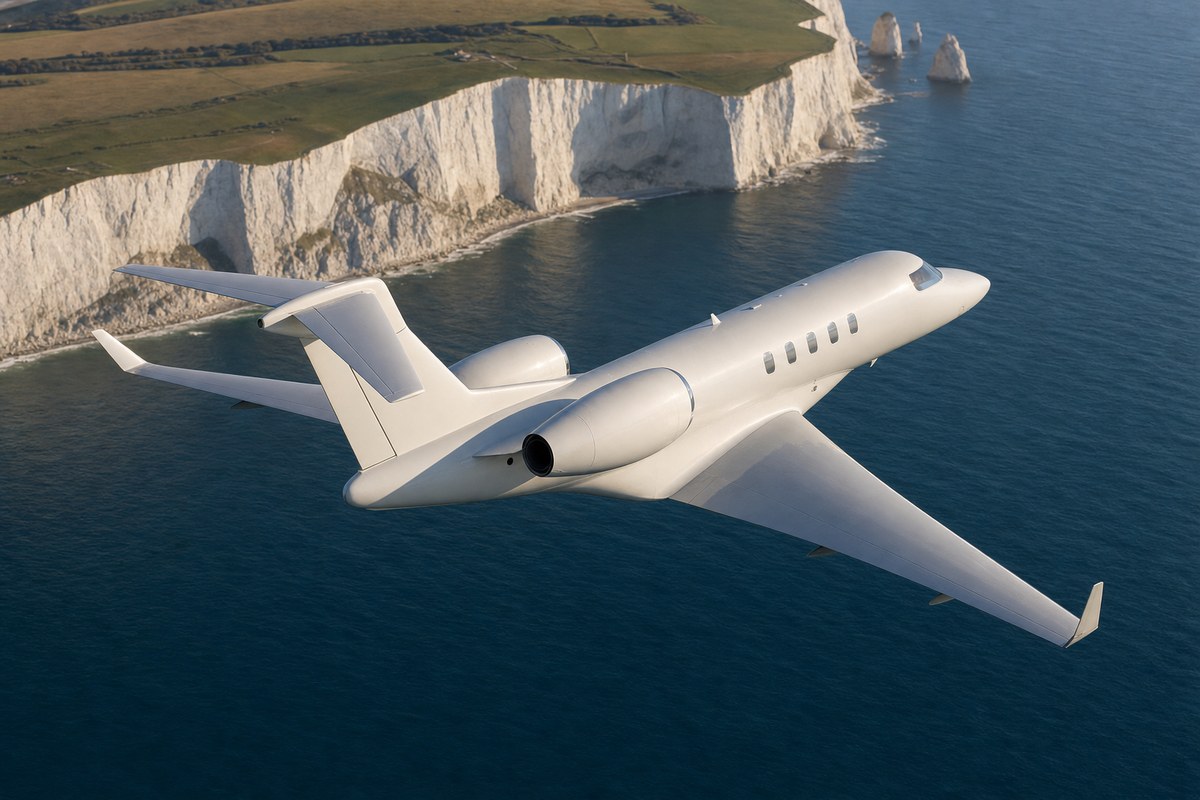
Researchers at the Indian Institute of Technology (ISM) Dhanbad, led by Aditi Sengupta and Abhijeet Guha of the Department of Mechanical Engineering, have published a numerical study of the SHM1 natural laminar flow airfoil in Frontiers in Aerospace Engineering. Honda R&D developed the SHM1 for its small business jet, and it has previously been tested in low-speed wind tunnels, transonic facilities and in flight. The team solved the two-dimensional compressible Navier-Stokes equations on an O-grid mesh with 1,251 points around the airfoil and 401 points normal to the wall, and validated the results against SHM1 flight-test pressure distributions and transonic wind-tunnel measurements of the NACA0012 airfoil.
Six cases were run at angles of attack of two and two and a half degrees: low speed at Mach 0.134, climb at Mach 0.31, design cruise at Mach 0.62, and transonic off-design cases at Mach 0.72, 0.73 and 0.78. Natural laminar flow matters because a laminar boundary layer can produce roughly ten times less friction drag than a turbulent one, and friction drag can account for nearly half of total aircraft drag in cruise. Numerical Schlieren visualization showed trailing-edge vorticity shedding at low speed. At climb, upstream-propagating Kutta waves appeared and, at cruise, arranged symmetrically over the pressure and suction surfaces. Vorticity spectra changed from a single dominant peak at low speed, to multiple peaks at climb with a Strouhal number of 0.009, to a chaotic multi-periodic spectrum at cruise.
Beyond a critical Mach number of about 0.70, a supersonic pocket forms on the suction surface. At Mach 0.72 it is terminated by a near-normal shock. At Mach 0.73, the drag-divergence point, the shock strengthens and moves downstream, and a weaker shock appears on the pressure surface. At Mach 0.78, local Mach numbers upstream of the shock reach 1.25 to 1.3, strong normal shocks form on both surfaces, and a lambda-shock appears on the suction surface, with the largest separation bubble and highest skin-friction drag.
The drag-divergence case produced the highest lift but also the largest drag coefficient, giving poor efficiency. The shock-induced separation case had the least drag of the six but lost a significant amount of lift. Cruise at Mach 0.62 gave the best lift-to-drag ratio, roughly 99, while the transonic cases fell between about 10 and 61. The authors say the results provide benchmark data for testing flow-separation and shock-control techniques.