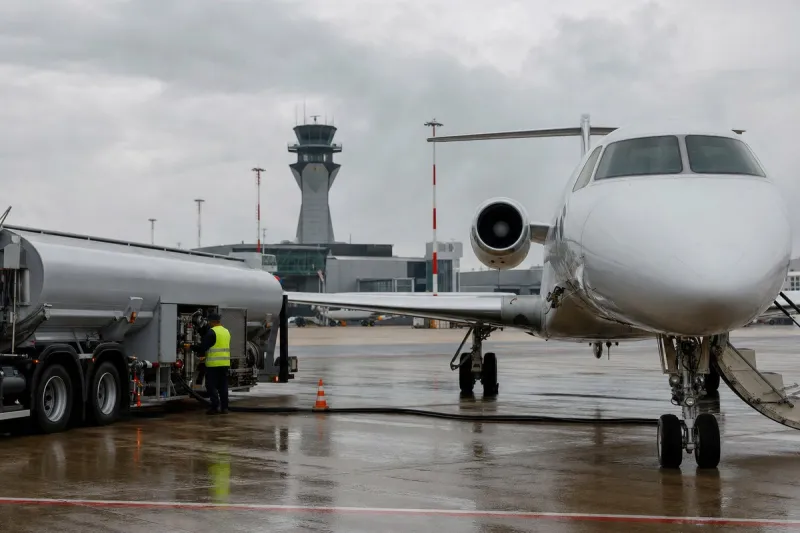
Dual Engine Failure and Fatal Highway Crash Landing: The Investigation into Hop-a-Jet Flight 823
Why It MattersA single design-level flaw affecting two independently operating engines the same way challenges the assumption that dual-engine redundancy reliably prevents simultaneous power loss.
What happened
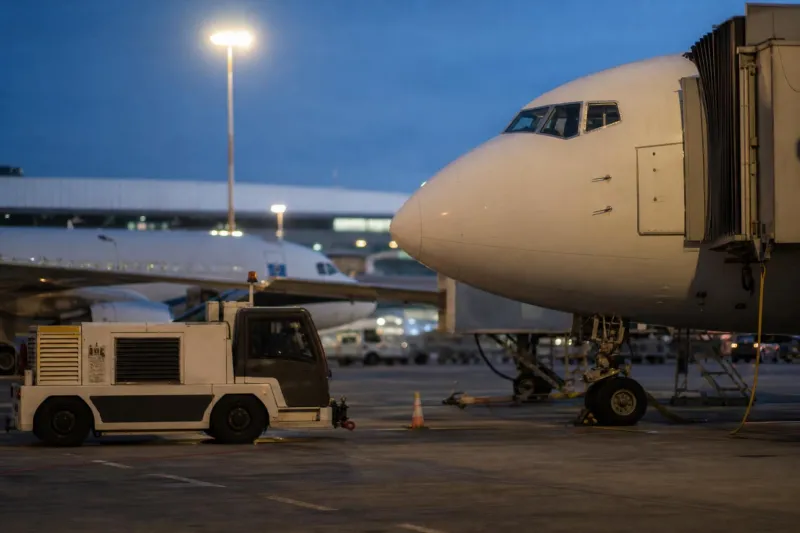
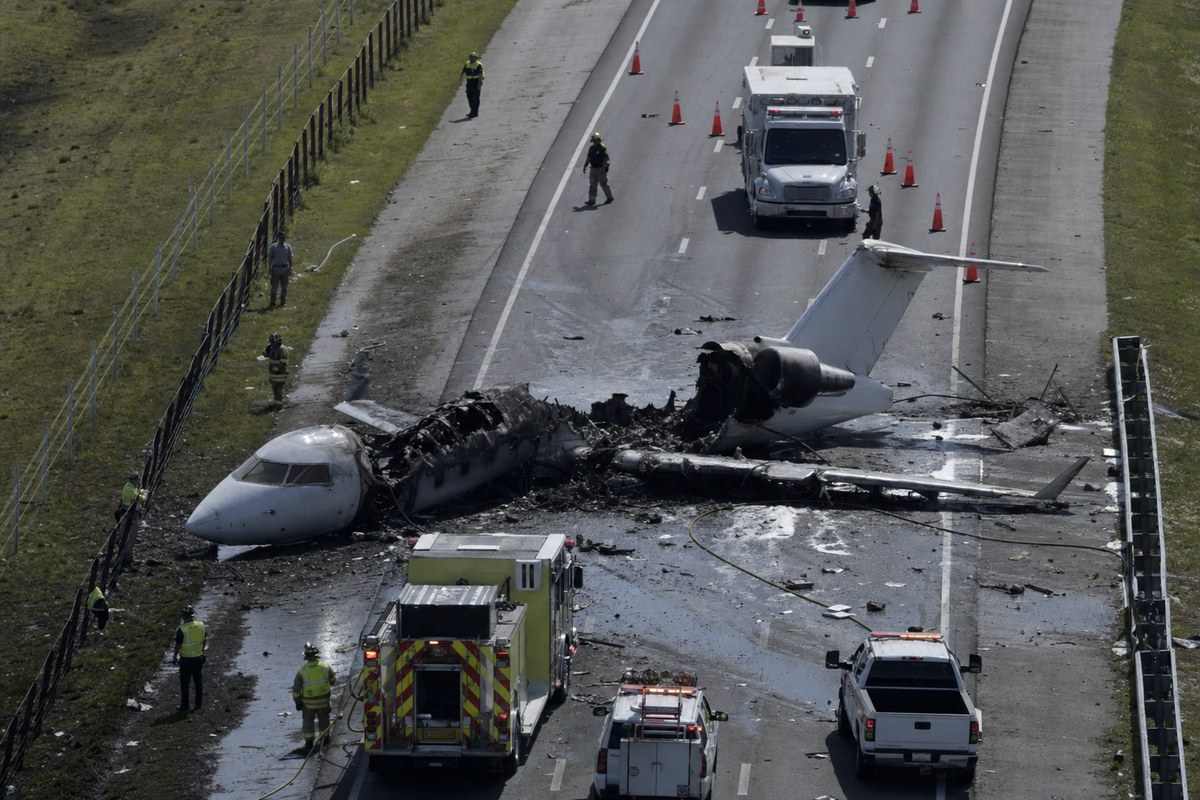
Hop-a-Jet flight 823, a Bombardier Challenger 604 registered N823KD, suffered a dual engine failure while maneuvering for final approach into Naples Airport in Naples, Florida, on February 9, 2024. With approximately 90 seconds to impact and insufficient altitude to reach the airport, the two pilots landed the aircraft in the southbound lanes of Interstate 75, resulting in a fiery crash. Both pilots were killed; the cabin attendant and two passengers survived and escaped the burning wreckage.
The flight had originated at Fort Lauderdale Executive Airport before repositioning to Ohio State University Airport in Columbus, Ohio, where it picked up passengers Aaron Baker, an equity trader and Vice President at investment firm Scioto View Partners, and his girlfriend Audra Green. Baker had originally booked the trip through NetJets but was rerouted to Hop-a-Jet's Challenger 604 due to high demand ahead of Super Bowl LVIII. The crew consisted of pilot-in-command Ed Murphy, 50, who had 10,380 total flying hours including nearly 2,700 on the Challenger; first officer Ian Hoffman, 65, a recently retired airline pilot with 24,851 total flying hours but only 116 hours on the Challenger 600 series; and cabin attendant Sydney Bosmans, 27.
The crash was captured on video and widely shared. Investigators from the National Transportation Safety Board ruled out fuel exhaustion, bird strike, and accidental fuel shutoff as causes. According to the final accident report, published in early 2026, both engines independently possessed an identical latent mechanical flaw that made them each vulnerable to failure under the same specific operating conditions — a combination the report described as unprecedented. Hop-a-Jet, operating as its subsidiary Ace Aviation Services, had maintained a fatal-accident-free record for 48 years prior to the crash. Hop-a-Jet was founded in 1976 by former US Navy pilot and World War II veteran Harvey Hop in Fort Lauderdale, Florida, and owns and operates a fleet that includes Learjet 60s, Bombardier Challenger 350s, Challenger 604s, and Challenger 605s.
Industry impact & what to watch
Dual-engine aircraft are certified on the premise that the two powerplants fail independently, so that a mechanical problem in one does not predict a problem in the other. A latent flaw built into both engines from the same design or production lineage breaks that premise, because it removes the independence the safety case depends on without any single detectable trigger — no fuel event, no bird strike, no crew error.
This case also shows how thin the margin can be even when a crew reacts correctly: with roughly 90 seconds and no altitude to spare, the pilots chose a highway rather than open terrain and still could not prevent a fatal outcome. It sits alongside the operator's record of 48 years without a fatal accident, underlining that a shared latent defect can undo a long safety history in a single flight.
The report's description of the operating conditions as unprecedented raises the question of whether other aircraft carrying the same engine type share the same latent vulnerability, and whether any airworthiness action follows to require inspection or redesign. Which authority issues such a directive, and for which engine population, is the next fact that would show how far this finding reaches beyond the single accident.