IIT Madras develops bird-inspired morphing wing skin to prevent aircraft stalls after 20 years of research
Why It MattersRetrofit-capable aerodynamic add-ons could let operators improve stall margins and fuel efficiency on existing fleets without waiting for manufacturers to redesign wings.
What happened
A research team at the Indian Institute of Technology Madras has developed a flexible, bird-inspired "morphing skin" attachment for aircraft wings that reshapes itself in real time to prevent aerodynamic stalls, the result of more than 20 years of research. The team is led by Dr Rinku Mukherjee of the Department of Applied Mechanics and Biomedical Engineering, alongside IIT Madras alumni Antony Samuel B and Dr Aritras Roy.
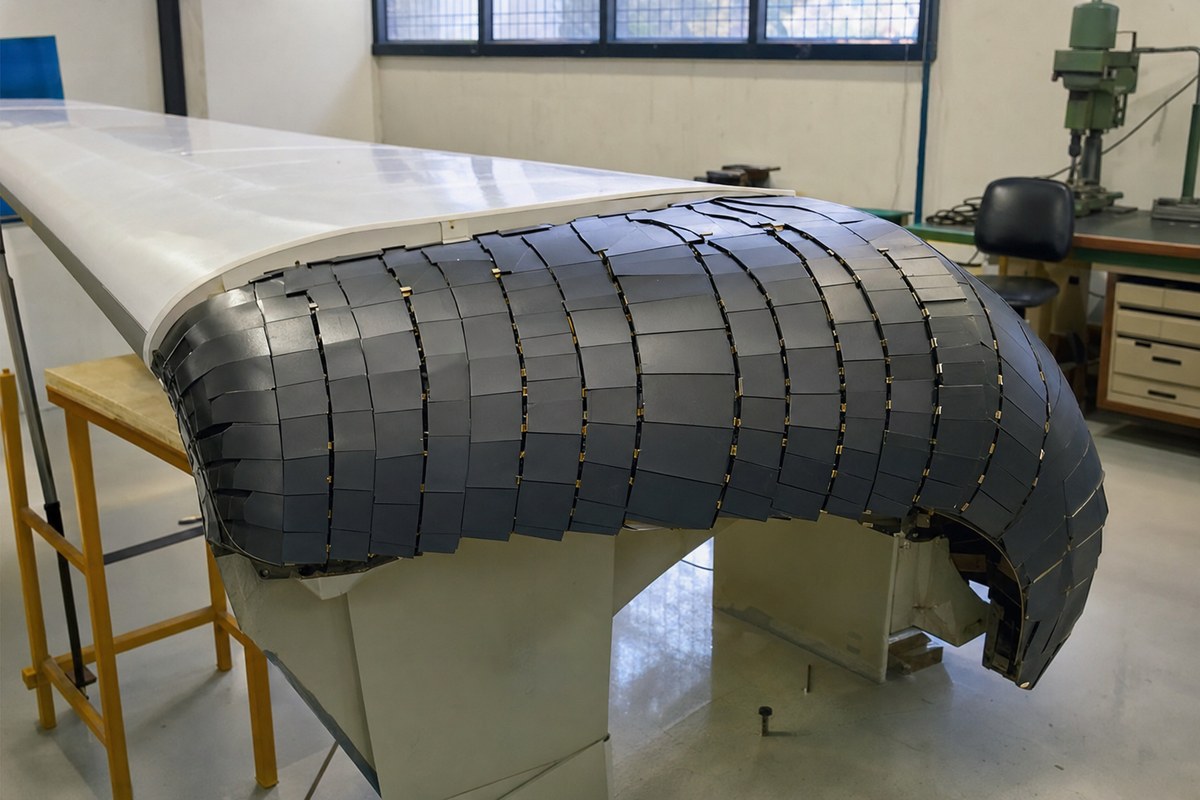
The device is an additional external wing assembly that detects when airflow begins to separate from a wing and realigns itself with the flow to keep it attached, maintaining lift at steeper tilt angles than conventional fixed wings can sustain. The system integrates predictive computational modelling, wind tunnel validation, and Macro Fibre Composite (MFC) strips capable of sensing and actuating shape changes in real time. It was tested on a three-dimensional wing using a standard NACA 4415 airfoil configuration, and the research has been published in the European Journal of Mechanics, B/Fluids, a peer-reviewed Elsevier journal.
"Our research taps into a universal curiosity in that birds rarely stall, yet aircraft, despite being inspired by them, still do," Dr Mukherjee said. "This research is more than 20 years old, where we have taken a concept to study separated flow and converted it into a physical device to actually control flight properties in real time. We have experimentally validated the concept and also tested test cases and patented the same. Hence, we are ready to implement this in real aircraft in real time flight conditions as we speak." The team says the morphing skin is an external add-on that can be retrofitted onto existing aircraft without requiring manufacturers to re-engineer wings from scratch.
Industry impact & what to watch
This work belongs to a broader effort in aerospace engineering to borrow shape-changing strategies from biology to solve stall and drag problems that fixed-geometry wings cannot address on their own. Morphing structures typically trade a small weight or complexity penalty for a wider stable flight envelope, and the team frames its device around exactly that trade: minimal added weight for drones, greater stability during extreme manoeuvres for defence platforms, and steeper safe tilt angles for commercial aircraft operating at busy or short runways.
Retrofit compatibility is the detail that matters most here, since it separates this concept from wing redesigns that would need years of manufacturer certification and fleet-wide re-engineering. An add-on that bolts onto existing airframes changes who can adopt it and how fast, if it clears the certification and durability testing that real flight conditions demand.
What happens next depends on whether the patented device moves from wind tunnel and computational validation into flight testing on an actual aircraft, and which manufacturer, operator or defence programme agrees to host that trial. The claimed fuel and emissions benefits, tied to enhanced lift with reduced drag, remain to be demonstrated outside controlled test conditions.