Opa-locka vs Miami Executive: How Airport Choice Shapes a South Florida Home Search for Frequent Private Flyers
Why It MattersWhere a home sits relative to a business-aviation airport is becoming part of the residential brief, tying general-aviation infrastructure, Customs hours and noise exposure directly to luxury property decisions in South Florida.
What happened
A MILLION real-estate feature advises frequent private flyers to treat the choice of airport as part of the residential brief, comparing Miami-Opa locka Executive Airport (OPF) and Miami Executive Airport (TMB). OPF, at 14201 NW LeJeune Road in Opa-locka, primarily serves general and business aviation and acts as a reliever for Miami International Airport. It offers full-service FBOs, on-field U.S. Customs clearance, and airframe, powerplant and avionics repair. TMB, at 14720 SW 128th Street in southwest Miami-Dade, is county-owned and managed and handles business aviation alongside flight training.

The feature places OPF in an initial northern and coastal search, with approximate distances of nine miles to Bal Harbour, 14 miles to Miami Beach and 14 miles to Brickell Avenue. TMB is positioned as the starting point for a southwest Miami-Dade search, including Pinecrest, while buyers weighing Coral Gables, Coconut Grove or Brickell are advised to test both airports. It recommends timing the full transfer from each shortlisted home to the intended FBO, at hours matching the flight calendar and including the return journey, rather than relying on a map pin.
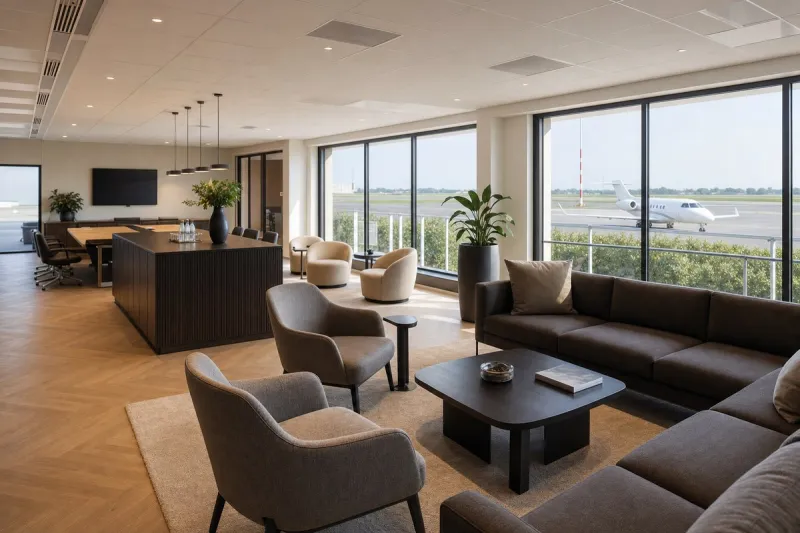
OPF's longest runway, 9L/27R, measures 8,002 by 150 feet, with others of 6,800 by 150 feet and 4,309 by 100 feet. TMB's three runways are approximately 6,000, 5,003 and 4,001 feet. OPF amenities include hangar space for aircraft up to a Global, a ramp canopy, crew cars, a conference room, showers, Wi-Fi and an on-site café, with availability to be confirmed with the operator.
OPF has 24-hour FBO operations alongside on-field Customs availability with set hours. Historical 2003 noise modeling for OPF placed the greatest impacts east and northeast of the airport; the feature describes this as not a current property-level assessment and suggests buyers visit homes at different times of day.
Industry impact & what to watch
For frequent flyers in the luxury segment, the airport is effectively a fixed point around which a home search is built, and drive time to the FBO at the hours the flight schedule actually demands matters more than straight-line distance. Two reliever fields within the same metro area can pull a buyer toward different neighbourhoods, which links general-aviation infrastructure directly to where high-end demand concentrates.
Runway length alone does not settle whether an aircraft can operate from a field. Performance at expected operating weights, summer temperatures and route requirements decides that, so flight departments and their advisers treat published runway figures as a starting point. The same logic applies to international arrivals: round-the-clock FBO staffing is not round-the-clock Customs clearance, and the hours of clearance are what shape real itineraries.
The items still to be pinned down before a purchase are TMB's current Customs hours and advance-notification requirements, to be checked directly with the airport, and a current, property-level noise assessment in place of the 2003 modeling.