FAA Issues Emergency Airworthiness Directive Covering 957 Lycoming Engines Over Microcracked Piston Pins
Why It MattersThe directive shows regulators can impose oil-system inspection requirements beyond a manufacturer's own service bulletin when in-service failures reveal gaps in supplier quality control.
What happened
The Federal Aviation Administration has published emergency airworthiness directive AD 2026-17-10, appearing at 91 FR 55451 in the Federal Register, requiring operators of 957 Lycoming piston engines to replace piston pin P/N LW-13445 before further flight in certain cases. The directive becomes effective September 14, 2026, though some compliance obligations are already in force pending that date. It covers three engine families built by Lycoming Engines of Williamsport, Pennsylvania — the O-235, O-540, and IO-540 series — which power aircraft including the Cessna 152, Cessna 182 Skylane, Cessna 206 Stationair, Piper PA-32 Cherokee Six, Piper Saratoga, and Britten-Norman Islander.
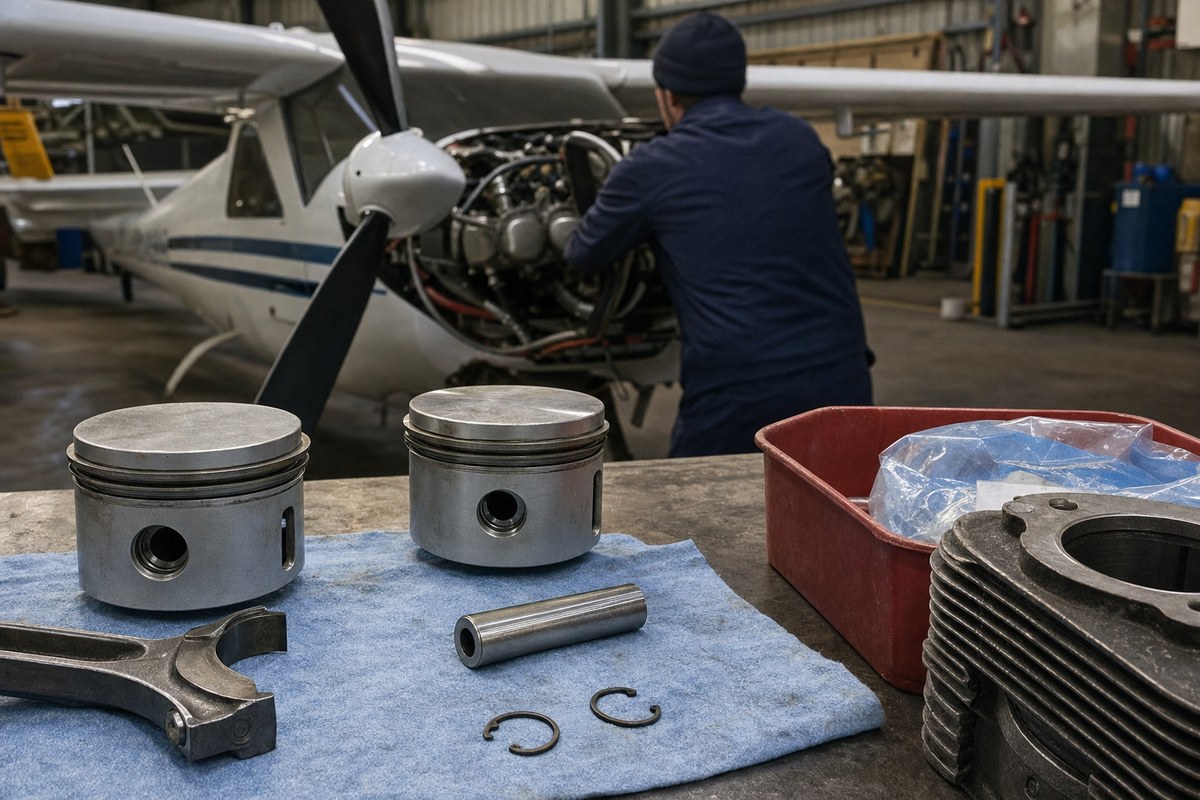
A manufacturer investigation traced the defect to a third-party piston pin supplier that introduced microcracks and metallic inclusions in the base metal due to changes in honing and tooling processes. The cracks are not detectable by visual inspection or routine preflight checks and propagate only under flight loads; when a pin fractures, metal debris circulates through the engine, causing bearing damage, oil passage blockage, and oil starvation. The FAA received reports of two in-service engine failures — complete, non-detectable shutdowns with little or no advance warning. The affected production window covers piston pins with an FAA Form 8130-3 production date between January 7, 2021 and December 15, 2025; engines whose form is missing or whose production date cannot be determined are treated as affected.
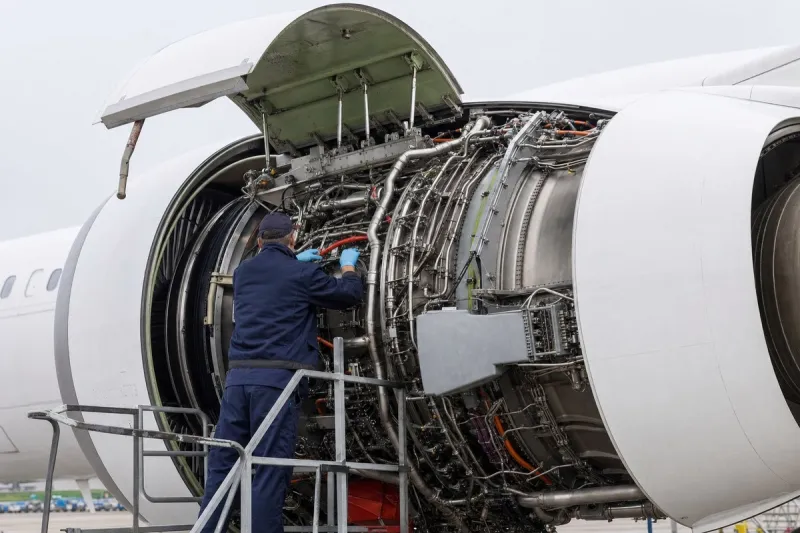
The directive establishes a tiered compliance structure. Operators must ground the aircraft before further flight if an oil change and filter inspection reveals metal particulates, or if the engine is listed in Table 3 of Lycoming MSB 667A with more than 150 total hours time-in-service since installation of the affected pins. For other affected engines where an oil change has not been performed within the last 10 hours of operation, the oil change and inspection must occur within 5 hours time-in-service after the effective date. The AD goes further than Lycoming's own Mandatory Service Bulletin MSB 667A, issued in March 2026, by additionally requiring an oil change and visual inspection of the oil filter, oil pressure screen, and oil suction screen for metal particulates within 5 hours time-in-service — a requirement not present in the manufacturer's bulletin. Inspection guidance is contained in Lycoming Mandatory Service Bulletin No. 480F.
The FAA estimates total compliance costs for U.S. operators at approximately $2.27 million across the 957 affected engines, or roughly $2,370 per engine, made up of two labor hours at $85 per hour plus $2,200 in parts. Lycoming has indicated that some costs may be covered under warranty. Special flight permits allowing ferry flights to a maintenance facility are available for the pin-replacement requirement only if the oil-system inspection has already been completed and found clean; operators who have not yet conducted that inspection may not use a special flight permit as a workaround.
The directive was signed by Paul R. Bernado, Acting Director of the Compliance and Airworthiness Division, Aircraft Certification Service, on August 21, 2026, and appeared on public inspection on August 26. Although the rule is immediately binding, the FAA will accept written comments through October 13, 2026, and may amend the directive based on substantive responses.
A recurring defect in Lycoming's history
This is the third FAA action against a specific Lycoming piston pin defect in 35 years. A 1992 airworthiness directive addressed Lycoming piston pins manufactured from non-aircraft-quality material during a narrow 1991 production window, and a 1997 amendment expanded that action to additional engine models. The current directive also follows AD 2024-21-02, issued in December 2024 and targeting connecting rod assemblies in approximately 16,000 Lycoming engines, which was superseded in April 2026 by AD 2026-04-11 after additional defective connecting rod assemblies were identified.
Industry impact & what to watch
A supplier-level change in honing and tooling produced a defect invisible to the inspection methods operators normally rely on, which is why the FAA reached past the manufacturer's own bulletin to mandate an oil-system check the bulletin did not require. That gap between MSB 667A and AD 2026-17-10 illustrates how a voluntary manufacturer response and a mandatory federal one can diverge once in-service failures are reported, even when both originate from the same root-cause investigation.
Piston-engine fleets that share a common part number across multiple aircraft types are exposed the same way regardless of airframe, because the failure mode sits in the engine rather than the aircraft. Owners and maintainers of the O-235, O-540, and IO-540 families now have to reconcile their own maintenance logs against the 8130-3 production-date window to determine whether a given engine is covered, and treat missing paperwork as inclusion rather than exclusion.
The open comment period through October 13, 2026 leaves room for the FAA to adjust compliance timing or scope if operators or Lycoming raise substantive objections. Whether warranty coverage from Lycoming meaningfully offsets the estimated $2.27 million industry-wide cost will depend on how many of the 957 engines fall within whatever warranty terms Lycoming applies, a detail not yet settled.