Unauthorized Structures at Nigerian Airports Blocking Air Traffic Control Visibility, Experts Warn After Benin Airport Runway Excursion
Why It MattersThe recurrence of tower sightline obstructions across multiple Nigerian airports points to gaps in enforcement of construction-approval rules that are meant to keep aerodrome layouts safe as airports expand.
What happened
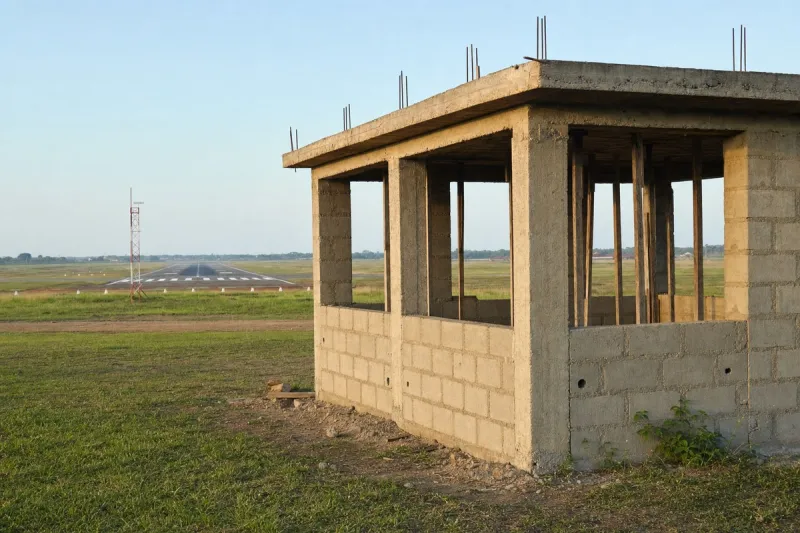
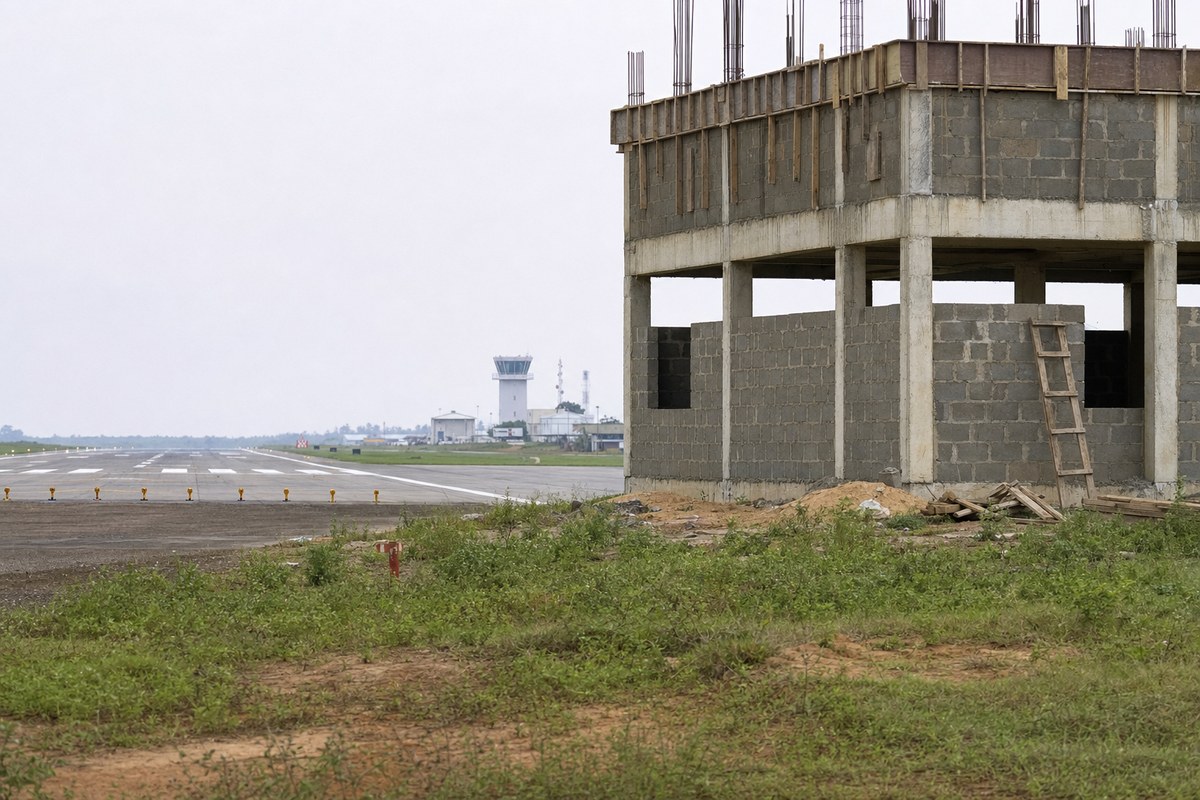
The Nigerian Safety Investigation Bureau (NSIB) has released preliminary findings on the Enugu Air runway excursion at Benin Airport, identifying an uncompleted building structure as obstructing the air traffic controller's line of sight toward the end of Runway 05, at the Runway 23 threshold end. NSIB recommended that the Nigerian Civil Aviation Authority (NCAA) ensure the control tower is positioned to provide an unrestricted view of all movement areas of the aerodrome, and urged the Federal Airports Authority of Nigeria (FAAN) to provide a suitable location for a Nigerian Airspace Management Agency (NAMA) control tower at the airport.
Similar visibility concerns have been raised at other Nigerian airports. At Nnamdi Azikiwe International Airport in Abuja, the siting of a new terminal was reported to have obstructed part of the control tower's field of view. At Murtala Muhammed Airport in Lagos, structures including the Legend Hotel, Executive Jet facilities, and the General Aviation Terminal were said to have restricted portions of the control tower's visibility, and Surface Movement Radar was deployed at both airports to help controllers monitor areas not fully visible from the tower.
Aviation security expert Ojikutu questioned when the NCAA last conducted an audit of Benin Airport, stating that no structure may legally be erected within an airport without NCAA approval. He said Murtala Muhammed Airport is surrounded by uncontrolled urban development and a complicated road network, and alleged that successive administrations have sold portions of airport land to private individuals. He also disclosed that the International Civil Aviation Organisation (ICAO) last year wrote to Nigeria's National Security Adviser seeking information on a threat assessment. Former Rector of the Nigerian College of Aviation Technology (NCAT), Capt. Sam Caulcrick, said regulations require control towers to have an unobstructed view of the runway, taxiways, and aircraft approach and departure paths. He noted that the incomplete building at Benin Airport, intended as a shelter for a localiser transmitter, blocked the controller's view of the clearway where the aircraft came to rest after the runway excursion, not the runway approach itself, and warned the situation would have been significantly worse had the building been completed.
Industry impact & what to watch
This case sits within a broader pattern of aerodrome-side construction encroaching on the visual and operational buffers that control towers depend on, a pattern NSIB's own recommendations and the accounts from Abuja and Lagos suggest is not confined to one airport. Air traffic control safety rests on a simple structural premise: the tower must retain sight of every movement area, and any building erected inside that sightline, whether finished or not, changes the safety case for the airfield without changing the procedures controllers are told to follow.
Where that sightline cannot be preserved, airports have turned to Surface Movement Radar, as was done at Abuja and Lagos, but that is a workaround for a siting problem rather than a fix to it. The Benin findings show how thin the margin can be: an unfinished structure meant to shelter navigation equipment already blocked view of the clearway, and Caulcrick's warning that a completed building would have made the situation markedly worse underlines that construction approval and airport safety oversight are the same question, not two separate ones.
What happens next depends on how NCAA responds to NSIB's recommendation on the Benin tower's positioning, whether FAAN identifies a new site for the NAMA tower there, and whether the audit history Ojikutu raised is made public. Ojikutu's account of ICAO's letter to Nigeria's National Security Adviser also points to an outstanding line of inquiry whose resolution would clarify how seriously airport land encroachment is being treated at the regulatory level.