Flight Crews Face Highest Radiation-Related Cancer Death Rates Among 503 US Occupations, JAMA Study Finds
Why It MattersThe findings sharpen pressure on the FAA to adopt the dose limits, monitoring, and exposure disclosure already required in the UK and Europe for radiation-exposed occupations.
What happened
Researchers from Harvard Medical School and colleagues, examining more than 12.7 million US deaths recorded between 2020 and 2024, found that among 503 occupations flight attendants had the highest proportion of deaths from radiation-related cancers and pilots the second-highest, surpassing workers who handle radioactive materials directly. The mortality data was linked to each decedent's usual occupation and covered approximately 14,000 pilots and 7,000 flight attendants.
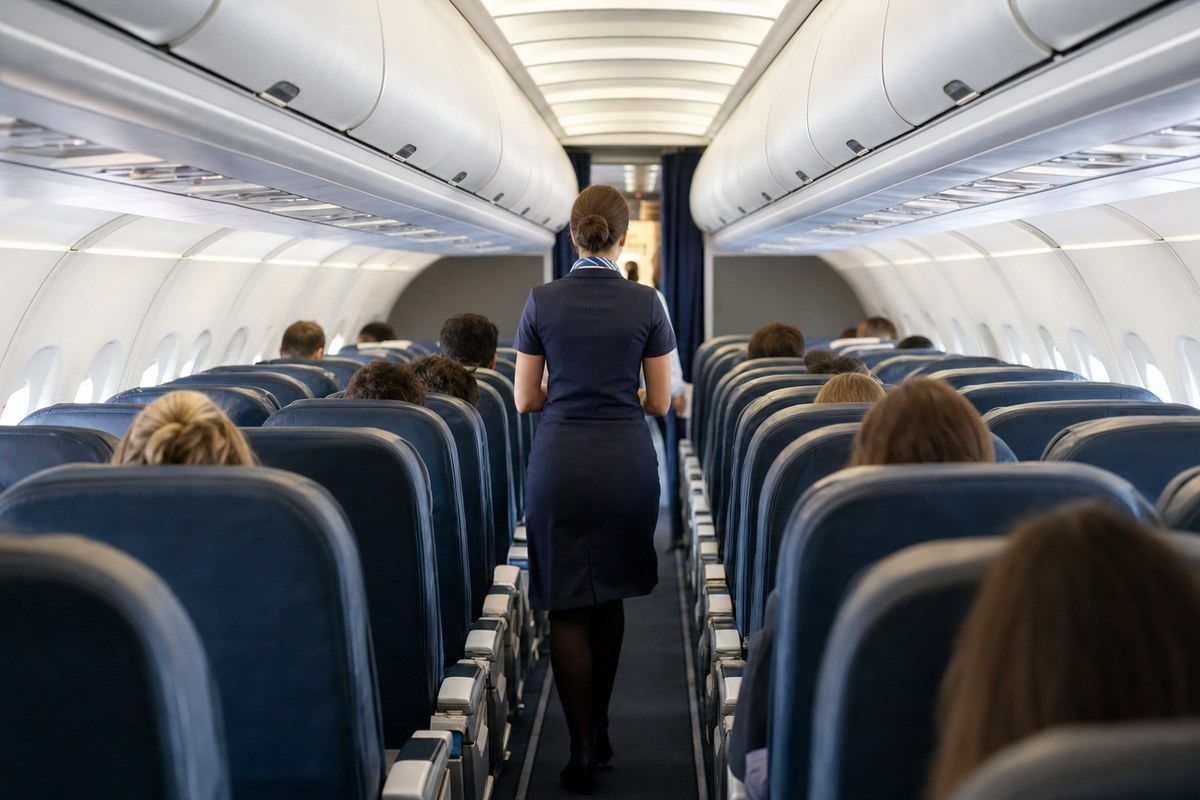
Flight attendants showed roughly 50% higher odds of dying from a radiation-related cancer than the general working population, while pilots showed about 36% higher odds. About 6.9% of deaths among flight attendants and 6.7% of deaths among pilots were from radiation-related cancers. Statistically significant elevations were found for breast, central nervous system, and prostate cancers, as well as melanoma; pilots also showed a higher rate of leukemia deaths. Neither group showed elevated death rates from cancers not associated with radiation, such as colon cancer.
Two Australian radiation experts, Catherine Olsen and Ken Karipidis, wrote in an accompanying commentary that this pattern supports occupational radiation exposure as the primary factor rather than lifestyle or socioeconomic influences. According to the US Centers for Disease Control and Prevention, flight crew accumulate an estimated 3 to 6 millisieverts of cosmic ionizing radiation annually depending on routes and altitude, compared with roughly 0.4 millisieverts for a passenger taking ten cross-country round trips per year. Cosmic radiation intensity increases with altitude and latitude, making long-haul and trans-polar routes between North America and Europe or Asia associated with higher exposure.
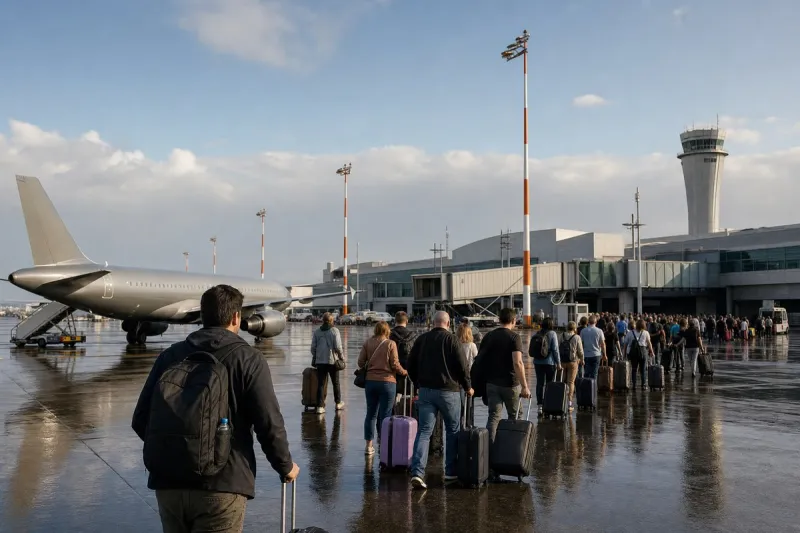
The FAA has classified flight crew as radiation workers since 1994, but the United States sets no federal dose limits and requires no routine monitoring, unlike the UK and European countries. European law requires airlines to assess and record individual crew exposure and inform crew of health risks; Air France adjusts flight schedules or reroutes aircraft if crew exposure approaches legal limits, and transfers pregnant crew members to ground duties immediately. The FAA recommends that airlines educate crew on ionizing radiation but does not enforce mandatory limits or monitoring. Approximately 43,000 US pilots and 96,900 US flight attendants are exposed to cosmic ionizing radiation doses significantly higher than those experienced on the ground.
What the study can and cannot show
The study authors cautioned that the findings do not establish individual dose levels, noting that occupations are sometimes misrecorded on death certificates and that the distinct effects of cosmic radiation, UV-A exposure through cockpit windows, and circadian disruption from irregular schedules and time zone crossings cannot be fully disentangled. They also said the results do not indicate that occasional leisure flying raises a passenger's cancer risk, since the elevated figures reflect cumulative career exposure among working crew.
The National Academies have urged the FAA to revise its approach, describing the current framework as insufficient. Labor organizations including the Association of Flight Attendants–CWA argue that US aircrew face higher average ionizing radiation exposure than many ground-based nuclear or medical radiation workers yet lack equivalent legal tracking, training, and mandatory safety protections. "This study further confirms radiation-related cancers that cause mortality must be acknowledged as occupational deaths," said Sara Nelson, president of the Association of Flight Attendants–CWA. "The risk is known, but crew are not educated or informed."
Industry impact & what to watch
This is a case of a workforce classified as radiation workers on paper since 1994 without the operational apparatus — dose limits, individual monitoring, mandatory disclosure — that other radiation-exposed occupations in the US and abroad already carry. Nuclear and medical radiation workers domestically, and airline crew in Europe, operate under tracked exposure regimes; US aircrew do not, despite the study finding their cancer mortality proportions exceeding those recorded for workers handling radioactive materials directly.
How airlines respond to comparable exposure data illustrates the gap: carriers such as Air France reroute or reschedule flights and reassign pregnant crew when exposure nears legal limits, a response only possible because exposure is measured and a limit exists. Without a US federal dose ceiling or routine monitoring, airlines have no equivalent trigger, and crew have no individual record to act on.
What happens next depends on whether the FAA moves beyond its current recommendation-only posture, given the National Academies' call for the framework to be revised and the Association of Flight Attendants–CWA's push to have radiation-linked deaths recognized as occupational. Any rulemaking, or the absence of one, will determine whether route-level cosmic radiation exposure becomes something US carriers are required to track rather than merely educate crew about.