Bozeman Yellowstone Airport Expects Brief Ground Stops, Traffic Delays for VP Vance Rally on Oct. 26
Why It MattersBrief, Secret Service-controlled ground stops show how small commercial airports absorb VIP movements: air traffic is barely affected while roads and curbside access carry most of the disruption.
What happened
Bozeman Yellowstone International Airport is preparing for Vice President JD Vance's visit to Belgrade, Montana, where he is scheduled to hold a rally on Monday, Oct. 26. Airport CEO Brian Sprenger said preparations involve coordination among the U.S. Secret Service, the Federal Aviation Administration, local emergency services, airport authorities and the vice president's staff, with the goal of accommodating the visit while keeping the vice president and the traveling public safe.
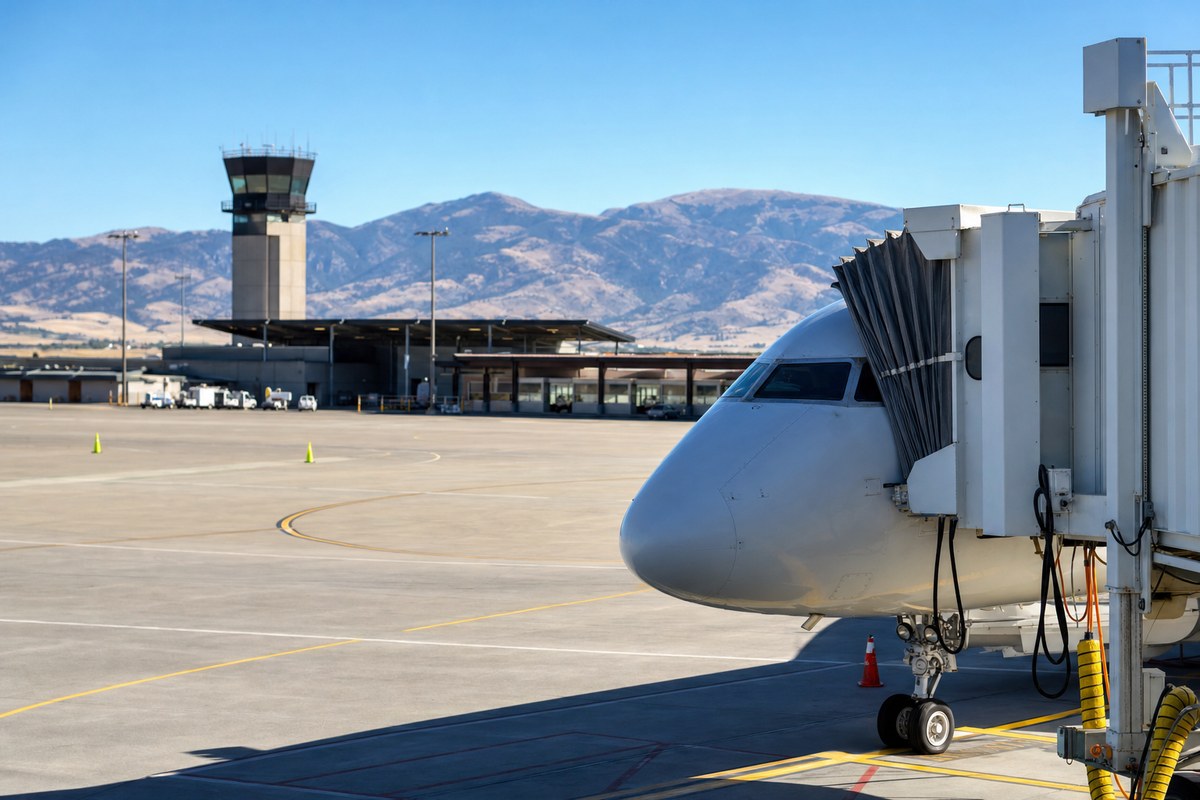
Sprenger said the airport expects temporary ground stops of roughly 15 minutes while security measures are in place, and does not anticipate significant disruption to air traffic because of their short duration. The Secret Service will decide when the airport can resume normal operations. He said the more noticeable impact is likely to be on ground transportation, with additional vehicles and possible detours or road restrictions, and he advised travelers to allow extra time on Monday, particularly between about 8:30 a.m. and 4 p.m.
The airport is also setting aside areas where opposing groups can exercise First Amendment rights, an approach Sprenger said does not necessarily mean protests are expected. The airport has previously handled visits by President Donald Trump and former President Barack Obama, including events on airport property. Passengers are advised to check flight status with their airlines before traveling.
Traffic backdrop
The preparations come as the airport records 3,004,991 total passengers in the 12 months ending September 2026, made up of 1,504,450 departing and 1,500,541 arriving. That is above earlier projections of about 2.9 million.
Passenger traffic from January through September rose 8.7% from the same period a year earlier.
Industry impact & what to watch
Visits by senior officials are a recurring operating condition for airports of this size, and the handling follows a consistent division of labour. The Secret Service controls when ground stops begin and end, the FAA and airport authorities coordinate the airspace and field side, and local services manage the roads. Because the stops are short, the cost lands mainly on ground access rather than on airline schedules.
For an airport carrying about three million passengers a year, the practical exposure is therefore concentrated in a single day's window. Curbside, parking and road approaches are where delay accumulates, which is why the airport's advice centres on arrival time instead of flight times.
The next point that settles the picture is the day itself: whether the 15-minute stops hold to that length, and whether the 8:30 a.m. to 4 p.m. window proves accurate for road conditions around the terminal.